One of the more dynamic areas within lock technology is what is going on in the core, and with the evolution of the patented keyways that so many still use today, especially in areas that require the utmost security and defense against key duplication and tampering. For this article Locksmith Ledger looks at what several companies are doing in this area, creating locks and products to meet the needs of locksmiths everywhere.
BEST/dormakaba
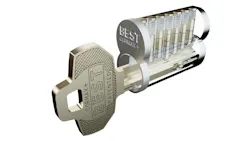
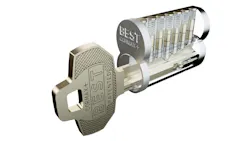
The new BEST CORMAX+ patented key system combines the flexibility of small format interchangeable cores (SFIC) with advanced key control to help organizations better protect their facilities. Backed by patent protection through 2043, CORMAX+ helps prevent unauthorized key duplication while maintaining the convenience and scalability customers expect from BEST key systems.
“CORMAX+ cores, patented until 2043, are the highest security core and key solution offered by BEST and dormakaba,” says Hillary Wernet, product manager, dormakaba Americas. “CORMAX+ cores are designed with a patented security rod that only works with a special slot in every CORMAX+ key. This prohibits unauthorized key duplication and reduces the threat of lost or stolen keys.”
Compatible with existing SFIC hardware (Best’s CORMAX is patented through 2027), CORMAX+ allows facilities to upgrade security without replacing locks, reducing retrofit costs and disruption. Ideal for education, healthcare, government, and commercial applications, CORMAX+ delivers long-term key control, enhanced security, and a practical path to modernizing mechanical access management.
“Because of this, facilities can deploy CORMAX+ cores only where needed while leaving other openings on standard or legacy systems,” says Wernet. “Patented key control does not have to be an all-or-nothing decision. CORMAX+ allows organizations to apply the highest level of key control to their most critical openings while continuing to leverage existing SFIC hardware and key systems elsewhere.”
As she points out, the security industry has shifted from protecting locks to protecting credentials. “CORMAX+ combines the flexibility of BEST SFIC (small format interchangeable core) with patented key control, helping organizations maintain control of their keys, reduce unauthorized duplication, and protect their facilities well into the future.”
She continues, “The importance of a patented keying system lies within maintaining control of who has access to a facility over time. Patented keying systems protect against unauthorized key duplication, meaning not just anyone can have a copy of a key made. Many facilities issue keys to employees, contractors, maintenance personnel, vendors, or temporary employees. Without a patented keying system any of those individuals could potentially make a copy without permission. Years later, the facility has no idea how many keys are circulating.”
Overall, the industry will continue to see “innovation in both patented key systems and electronic access control, but I don't see mechanical security going away,” Wernet says. “There will always be a need for a reliable, physical key system because it provides a level of simplicity, durability, and independence from power, batteries, networks, and software that electronic systems can’t fully replace.”
Wernet sees a strong future with electronic solutions, “particularly when it comes to convenience, credential management, audit trails, and remote administration,” she says. “Those benefits are driving increased adoption across many markets. But what's interesting is that even as electronic access grows, we still almost always see a mechanical component included as part of the overall solution. Many electronic locks today incorporate a mechanical override because customers recognize the value of having a dependable backup method of access.”
Looking ahead, she expects the future to be less about mechanical versus electronic and more about how the two technologies work together. “Patented key systems will continue to evolve with stronger key control, enhanced security features, and better integration into broader access strategies,” she explains. “At the same time, electronic credentials will provide additional flexibility and convenience where they make sense. Ultimately, facilities will continue to need both. Electronics can enhance the user experience and simplify administration, but a secure, controlled mechanical key system remains a critical foundation of physical security and will continue to play an important role for decades to come.”
GMS

GMS, well known for their MX/MXA Restricted Key System and Corematic pneumatic SFIC capping press (available in .140 spacing MXA and .150 Best spacing), continues to be a leader in this space, and is always bringing new products to market. For example, the company recently released its R118T Rim thumb turn cylinder, 1-1/8” brass turn piece.
With the evolution of the modern pin‑tumbler cylinder, and interchangeable cores (both SFIC and LFIC), GMS is able to give institutions “faster rekeying, scalable master key systems, and stronger key control,” says Jade Holland, director of sales and marketing, GMS. “Restricted key platforms, including systems like GMS MX/MXA restricted key control program, further improved security by preventing unauthorized duplication.”
As Holland points out, today’s market blends three categories: traditional mechanical cylinders, hybrid mechanical‑electronic solutions, and fully digital smart locks.
“Mechanical systems remain essential for reliability and cost‑effectiveness, while electronic platforms offer audit trails, remote management, and mobile credentials,” she explains. “The lock industry is entering a new era where mechanical and electronic solutions work together rather than compete. As technology advances, the goal remains the same: secure, reliable, and controlled access. Whether through a restricted mechanical system like GMS MX/MXA or a fully integrated digital platform, the future of access control will be defined by flexibility, accountability, and intelligent design.”
Looking at key control, a strong key control program is essential because “it prevents unauthorized duplication, ensures accountability for every issued key, and protects facilities from security breaches,” adds Holland. “The GMS MX/MXA Restricted Key System is designed specifically to solve these problems by using proprietary keyways, controlled distribution, and strict authorization procedures. Unauthorized duplication is the #1 failure point in traditional key systems.”
Standard keys (SC1, KW1, S22, C123, etc.), she adds, can be copied at hardware stores, kiosks, or even grocery stores, making true key control impossible. “Even ‘Do Not Duplicate’ stamps offer no real protection,” Holland explains. “Schools, businesses, and healthcare facilities face real security risks when keys circulate without oversight. A reliable key control program eliminates these vulnerabilities by ensuring every key is authorized, documented, and traceable.”
The GMS MX/MXA Restricted Key System is engineered to provide true key control through several layers of protection:
· Proprietary Keyways (Only MX Keys Fit MX Cylinders): MX keyways are unique profiles. Only MX key blanks work in MX cylinders. This prevents hardware stores or kiosks from cutting copies
· Controlled Distribution Through Authorized Dealers: MX/MXA key blanks are only available to authorized MX/MXA dealers. Dealers must safeguard blanks, cylinders, and key records, and may only duplicate keys for approved signatories with signature cards on file.
· Mandatory Authorization for Every Duplicate: Keys are only issued with proper authorization, and issuance is recorded. This gives system owners confidence that no extra keys exist outside the documented system.
“A key control program is only as strong as its ability to prevent unauthorized duplication,” she adds. “The GMS MX/MXA Restricted Key System delivers true key control by combining proprietary keyways, controlled distribution, strict authorization, and enhanced cylinder security — all at a cost significantly lower than many competing restricted systems.”
KSP
KSP has a lot going on these days and is introducing some new SFIC and LFIC options this summer, with expected shipping by September, says KSP President Gene DeGre.
“We've always been customer driven, and by demand, our small format core is by far our main product,” he explains. “The A2 system is the most significant system we use and one of the things our customers have told us is to keep things as simple as you can or as uniform as possible. So, what we decided to do is start with the Schlage LFIC core, as well as a kick cylinder, which also happens to be the Schlage version, as our customers told us they were the most popular, the most well adopted. And then also a keyed cylinder.”
The goal is to be able to “blend in all of our keyways, including our proprietary keyways, and maintain the best system,” DeGre adds. “So, you have all these formats that are going to be using the A2 system, and it could also be the A4 system, but also share the keyway. And some of our distributors have their own proprietary keyways.”
He continues, “We like to be transparent with our customers, and for the past year we've been talking with them about our new products, and our customers have said, ‘that’s great but while you're at it, what about just like C keyway?’ And while I thought that had been done enough, our customers are overwhelmingly saying it's still in demand.”
DeGre notes that KSP is going to have an offshoot of three different products – the Schlage LFIC, the Schlage style kick cylinder, and a keyed cylinder – that are all going to be available in the Schlage C keyway and the Schlage bitting system.
“And then one of the things we're going to be working on in the next year is actually being able to provide these pinned up,” he explains. “So, all these different formats pinned up to your system or the system we create for you in an automated fashion. We're talking laser marking and master keyed systems, things of that nature. So hopefully you can get your turnkey solution and then get it out in the field and installed.”
Looking at what is going out in the field, there continues to be a lot of activity in retrofits, says DeGre, noting, “That's our market – the retrofits – that's our bread and butter. We get some new construction, but the majority of our sales are definitely in the retrofits and the build-outs, things of that nature.”
Another product that KSP is seeing a demand for are housing extensions, which “are a little bit more popular than we thought it was going to be,” says DeGre. “So, these are extensions that bolt on in the field. Very simple to use, and very well built. There's no drilling or anything that has to happen in the field. You just literally bolt them together, follow the simple instructions.”
Medeco
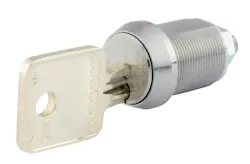
Built for strength, DC3 is one of the toughest keys on the market. Its 1/8-inch key cut is located on the broad side rather than the top — an intentional design that dramatically improves durability and resists key breakage. This makes DC3 an ideal solution for high demand environments such as casinos and gaming, parking operations, and vending systems where reliability is critical.
The DC3 can be ordered keyed alike or keyed differently and is available in a full range of sizes and functions to match your application. DC3 is offered in cam locks, switch locks, cabinet locks, and removable cores, and the system can also be masterkeyed for added convenience and flexibility.
As a leader in core technology, Medeco is also driving the “convergence of mechanical strength and digital intelligence, specifically in the retrofit market,” says Dale Bowman, director of Business Development, OEM, and International Sales, for Medeco Security Locks, who spoke with Locksmith Ledger earlier this year. “We aren't just selling locks anymore; we are selling intelligent endpoints. For a long time, high security meant UL 437 physical strength and a patented keyway that nobody could duplicate at the local hardware store. That is still the bedrock — you absolutely need that physical barrier. But the trend is moving rapidly toward smarter, more intelligent key systems and access control.”
As Bowman points out, end-users are realizing they don't always need to rip out standard hardware and run wires to every door to get audit trails, scheduling, or the ease of access management.
“They can swap an industry standard mechanical cylinder for an electronic one — like you see with the Medeco XT or CLIQ technologies — and suddenly that ‘dumb’ door is part of a sophisticated access control system,” he says. “We are also seeing the trend of intelligent key systems with access control features moving into non-traditional applications like parking meters, vending machines, traffic boxes, and others where traditional access control just won’t fit or work. These applications typically lend themselves to a ‘route management’ process where schedules and access can change quickly and usually involve some type of authorization. Intelligent keys with BLE capability access schedule changes and provide a digital audit trail. Customers want to know who went where and when, and they want that data in the cloud, accessible from their phone, not locked in a filing cabinet.”
He continues, “This is creating a new dynamic in route management operations as it’s allowing end users to capture data in places where data could not be captured before. And of course, as we know data is the “new oil” and this data is helping customers make better business decisions.”
Bowman also astutely points out that patented key control is evolving. “It’s no longer just about legal protection against unauthorized duplication; but also about the digitization of the entire key management process,” he explains. “Digital tools like SimpleK for managing master key systems and our latest tool, Fusion, digitizes the authorization process making it easier for customers to manage their authorization and request additional key copies or service. After three decades with Medeco, I’ve seen the industry shift from purely ‘how hard is this to drill or pick?’ to ‘how intelligent can we make this opening?’”
[Sidebar]
New Smart Deadbolt and Locks from Schlage
As the lock core evolves beyond just mechanical, Schlage, one of the leaders in patented key systems and interchangeable cores, recently unveiled the Schlage Sense Pro Smart Deadbolt, the brand’s first smart lock to feature its new Schlage Converge technology, which uses Ultra Wideband and the user’s home key on a compatible iPhone or Apple Watch to deliver seamless hands free unlock. More precise than geofencing or proximity-only technologies, Schlage Converge provides intuitive hands-free entry that understands intent to enter by calculating speed, trajectory, and motion and unlocks precisely as the user reaches their door, offering a smarter hands-free unlocking experience that combines ultimate convenience with trusted security.
“At Schlage, we are committed to delivering innovative, reliable, and high-quality products and experiences to our customers who trust us to secure their homes,” says David Perozzi, general manager, Allegion Home. “Sense Pro is a testament to this dedication, offering hands-free unlock and enhanced convenience for everyday life, while upholding the Schlage legacy of trusted security.”
Sense Pro is the brand’s first smart lock to support Matter over Thread, a modern connectivity standard that enables fast, secure, and reliable integration into a user's smart home ecosystem. Thread support allows Sense Pro to pair with a Thread enabled Apple Home hub2, including — Apple TV 4K (2nd generation), Apple TV 4K (3rd generation) Wi-Fi + Ethernet, HomePod (2nd generation), or HomePod mini — for consistent, low-latency performance.
With built-in WiFi, Sense Pro can be managed remotely through the Schlage Home app, which allows users to lock and unlock from anywhere, manage up to 250 unique access codes for keyless entry, set timed auto-lock and daily locking schedules, and customize lock settings. The Schlage Home app features three hands-free unlocking modes — intuitive, touch, and delay — giving homeowners the ability to optimize their Sense Pro to fit their home and lifestyle. Sense Pro can also be controlled in the Apple Home app alongside other smart home accessories and included in automations.
With standard usage, Sense Pro has up to six months of expected battery life, and provides a low-battery indicator on the lock touchscreen and in the Schlage Home app. If the lock’s batteries were to run out, Sense Pro includes a built-in USB-C jumpstart port for temporary power, giving homeowners peace of mind through convenient, uninterrupted access to their home. Sense Pro is Aliro compatible and, once certified, is expected to support Aliro digital keys in Samsung Wallet and Google Wallet later this year. These digital keys will allow Sense Pro owners with Samsung or Google devices enabled with UWB to use hands free unlock and those enabled with NFC to use tap to unlock.
The company also recently unveiled the Schlage XE360 Series of wireless locks with RealSync flexible connectivity. The XE360 devices feature an interchangeable FleX Module that enables options for access control connectivity. Choose from two modes — offline via Bluetooth or persistent (real-time) online via Wi-Fi. Wi-Fi mode includes RealSync, which has the ability to request and receive a lock's status and send a command to a lock and receive verification in seconds, with no additional hardware or wiring, saving time and costs.
About the Author
Paul Ragusa
Senior Editor
Paul Ragusa is senior editor for Locksmith Ledger. He has worked as an editor in the security industry for nearly 10 years. He can be reached at [email protected].