State of the Industry for Locksmiths
Key Highlights
- Locksmiths are increasingly adopting electronic and smart lock technologies, driven by the Internet of Things and mobile connectivity, transforming access control solutions.
- Adjusting project bids and pricing strategies is crucial as locksmiths face competition from DIY products and direct-to-consumer offerings, emphasizing the value of professional expertise.
- Diversifying revenue streams through consulting, training, and recurring service contracts enhances business stability and growth prospects in the evolving locksmith industry.

To close out 2025, Locksmith Ledger released its annual 2025 State of the Industry report, where we asked locksmiths for their thoughts on key topics around their business, including market and product areas where they are seeing the most growth, as well as technologies and trends they are most excited or concerned about. In this roundtable discussion, our panel of locksmiths delved into our findings, looking at current trends in the locking and access control world, such as the continued move to electronic access, the rise of smart locks and mobile access, consolidation among lock manufacturers, finding the next generation of locksmiths, training opportunities in 2026, and much more!
Download the full State of the Industry survey here.

Top Trends for 2026
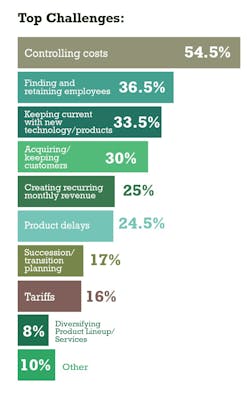
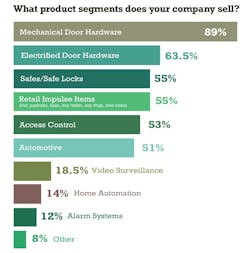
Glenn Younger, owner, Grah Safe and Lock started the discussion by pointing out that many of the top product trends (see graph) in the Locksmith Ledger State of the Industry report are happening partly because of what's going on in the industry, but also because of what's going on outside the industry.
“The tools that we now have are why we're able to do things that we weren't able to do 5 or 10 years ago,” he says. “A lot of it has to do with the current phase of our connectivity. [We’ve moved from] the phase of the internet where we could connect with computers … into mobile internet, where everybody had a computer now in their pocket. And really, we've moved into phase three of the Internet, which is the Internet of Things. So, there's networks everywhere … there's ubiquitous Wi-Fi and cloud-based everything. And smart homes are becoming a possibility.”
As a credential, the phone has become “very useful and powerful,” Younger adds. “And I think that's going to have more of an impact on changing the way that we get in and out of doors than anything else; the phone as a credential is going to let us do many things.”
Looking at the business side of things, especially with the emergence of smart locks and electrified door hardware, Wayne Winton, owner, Tri County Locksmith Service , points out that locksmiths must rethink the way they look at jobs and projects.
“One of the biggest things that is going to affect our industry in particular is we're going to have to severely adjust how we bid projects,” he explains. “There are so many products out there right now. I mean, if you type smart lock into your phone, you're going to get Amazon, you're going to get all these different things. And everybody's got this direct to customer mindset. And there's even a lot of manufacturers who are offering their products, and they're not just going to take what's coming in through distribution, especially when you're at the residential level. So how can you justify marking up your product 50-, 60-, 100-percent like we're used to in our industry and stay competitive?”
Installer and Consultant?
Winton says locksmiths are in a unique position with their installation knowledge and expertise to be a go-to person as more customers upgrade to electronic access control options.
“And the way that I've found to really kind of cushion that blow is to charge for what you are supplying, which is your knowledge,” Winton explains. “The thing that I have that nobody else has or that only other security professionals have is I know what absolute complete junk and garbage is out there online and what is a quality product because I know what I would put on my front door and that's what people are paying for. They're going to be paying for your knowledge and your expertise, and you need to build that into your price and plan. So, while I may not be able to make that profit on the product, I can put it back into the service call … I can raise the rates on that, and I can put it back into the labor.”
He continues, “And the other thing is, 10 or 15 years ago, we would go install a deadbolt and you would have a charge for a service call. You'd have a charge for a deadbolt installation, maybe an hour's worth of work and the lock itself, and then there would be some profit built into that lock. Now, the formula that I'm using, just to give a proper example of this, and I hope people pick this up and start using it. When we have an electronic deadbolt, and we're going to have a service call, so it is going to be about 15- to 20 percent higher than what it used to be. The hourly rate for my professionalism and expertise is also going to be increased by about 25% to compensate for that.”
Winton adds that many times the customer will ask him to help program the lock, and do follow ups as needed, which can all be added to the rate and create recurring revenue.
“Focus on where are your profits are going to be coming from in 2026 and moving forward,” Winton asserts. “Don't let it go cheap. Charge for your craft.”
Joshua Sands, owner, Key City Locksmith agrees, noting, “We know what's junk and what's not. And I will tell people all the time, you can go buy a Waze camera – that's the best for DIY – it's $30 for a reason, though. So, there's the consumer education along with our own education needs to go hand in hand now if we're going to compete with the DIYers and the Amazons.”
Growing Your Business
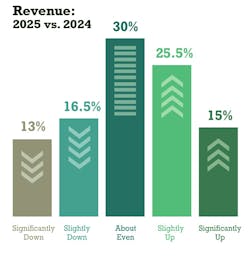
Sands points out that locksmiths who find themselves either staying the same or losing revenue or profits annually need to reevaluate their business plan and strategy moving forward.
“Staying the same is okay, but that shows me as an educator in the industry that the ones that are staying the same and not progressing as they should be,” he says. “Maybe you understand electronics and door hardware and stuff, but like Wayne said, are you listening to business strategies? This is a lot more than just turning a screwdriver. Many of us are business owners. And just because you can install a lock well doesn't mean you can sell it well. So, if you find that you're not growing, maybe reach out to one of us, ask for some assistance. Maybe it's not necessarily that you're stuck because you won't go to electronics, which you should be getting into that, hint hint. But maybe you just need a little help with the business side of things.
Younger agrees with both Winton and Sands, noting that whether it’s DIYers or business owners, sometimes they are selling more information and consulting than anything else.
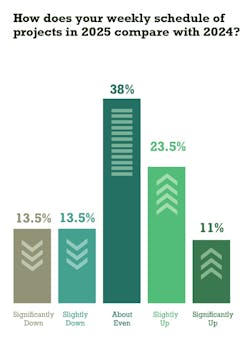
“That's what we're actually giving them,” he asserts. “So, I think that as we look at projects and workflow (see graph), one thing is clear as we do larger projects, our financials change dramatically, so it's important that you have your basics in place if you're doing larger projects. And I think that one of the big shifts is from the revenue and the profit side of our businesses, as we'll be doing more projects and a little bit less break, fix and repair kind of things, or the regular service calls to do the things that we normally do.”
He continues. “Those are great but now when you get a project and you've got two people on a project or one or four people on a project for a month, it dramatically changes your profit, and is a challenge because you really have to factor in making sure that you're charging for all of the things that you're doing. So, our quotes and our ability to quote – the business skills – are really going to be [important]. That's No. 1. And then No. 2 is, in the past, we sold material and labor. There's kind of two things that we sold if we break our businesses down. And part of that is because of how we must file taxes or pay sales taxes. But as we evolve, we are doing more consulting and offering more help and training so that must be factored in.”
Younger adds that locksmiths also need to be vigilant with the products that they sell, because now they might have a license involved or some sort of recurring monthly revenue.
“That change there, how our income is split up and what categories it's split up into, is changing pretty dramatically,” he explains. “We get about 10% of our income currently from recurring monthly revenue, and there is a license fee to keep their software up to speed and their firmware up to speed. And it might be a service contract; it's different things that we didn't used to have. And now our recurring monthly revenue fee is getting larger. So, I would suggest that everybody wants to make sure that they're looking at what's happening to their labor – is it going up or down? What's happening to their material sales, is that going up or down?”
He adds that knowing which parts of the businesses are growing helps him focus on them and helps make them better. “If we can go from having two income streams, labor and gross profit on materials sold to four, all a sudden our businesses become stronger. And so, I think that that's the evolution of our business is going to be more revenue streams, different revenue streams, as both Joshua and Wayne mentioned.”
About the Author
Paul Ragusa
Senior Editor
Paul Ragusa is senior editor for Locksmith Ledger. He has worked as an editor in the security industry for nearly 10 years. He can be reached at [email protected].