ALOA’s Fundamentals of Automotive Locksmithing Class Set for Dallas
Key Highlights
- Learn key origination, programming, and troubleshooting techniques for vehicles 2000 and newer in a 5-day in-person class.
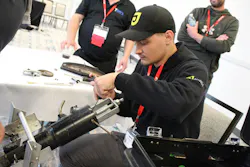
- Gain practical experience with key-cutting machines, programming devices, and lock-picking, under the guidance of industry experts.
- Understand the evolving role of automotive locksmiths, including the importance of system security, EEPROM data, and anti-theft protocols.
- Build a long-term career in automotive locksmithing by investing in education, tools, and networking with professionals.

ALOA’s 5-Day Fundamentals of Automotive Locksmithing (FOAL) Class, May 18-22, 2026, at the Embassy Suites by Hilton Dallas Market Center, Texas, provides an introductory course for those wanting to get started in the automotive side of the industry. In this in-person class, students will learn the fundamentals of automotive locksmithing to help kickstart their career under the guidance of experienced instructors.
In addition, the FOAL course is being offered June 21–27, 2026, during the ALOA 2026 Convention – Las Vegas at the South Point Hotel & Casino in Las Vegas. The convention includes education classes, networking events, certification testing, and the Security Expo. Another FOAL session is also scheduled for October 2026 in Dallas.
The course is primarily focused on 2000 and newer vehicles, with education on key origination methods for various systems to produce working keys without relying on key codes. Common problems along with their repair techniques and troubleshooting will be taught as well, with an introduction to key-cutting machines and key programming devices. The class also includes a section on ethics as an automotive locksmith.
“Upon completion of this 5-day course the students will have completed tasks such as code cutting auto keys, pinning of some common automotive locks, picked and decoded locks, trouble-shooting some of the common failures, as well as transponder programming,” says Edward Woods, one of the instructors for the course, who served as the first president of ALOA’s newly created Automotive Division, IAAL.
Jim Lornklang, RL, CAI, owner, Killeen Locksmith Services LLC, who is also teacher for the course, says his portion of the 5-day class centers on the relationship between EEPROM data and immobilizer systems.
“I want attendees to clearly understand how stored data inside a module affects start authorization and how anti-theft protocols are structured,” says Lornklang. “When students understand the logic behind the system – not just steps on a programmer screen – they gain real control over their work.”
While this class covers the fundamentals, there will be advanced ALOA classes “to help them to diagnose with confidence, avoid corruption issues, and make informed decisions when performing EEPROM reads and writes,” he explains. “Ultimately, my goal is for students to leave with conceptual clarity. If they understand the theory behind transponders and how that theory connects to anti-theft architecture, they won't just follow procedures, they'll understand the system they're working on. This understanding is what separates a screen clicker from a true automotive technician.”
Big Opportunity for Locksmiths?
Both Woods and Lornklang agree that there is a huge opportunity for locksmiths who are looking to add automotive work to their business long term.
“I believe there are a lot of opportunities to be an automotive locksmith,” notes Woods. “I see ads and am often asked to recommend someone to fill the Automotive positions. A lot of shops have dedicated personnel to do automotive work. Automotive is the fastest changing field of locksmithing. Yes, I know access control and cameras have made a lot of changes, but with the number of different manufactures in automotive and the huge theft in cars, bikes, and trucks the anti-theft systems are becoming way more complex.”
He continues, “The investment in the education and tools to do the modern automotive keys is substantial but the rewards are substantial also. This class would only be the beginning of a long journey to that guy that not only makes Chevy keys but also knocks out the BMW and Ferrari keys.”
Lornklang adds that in Texas alone there are roughly 26 million registered vehicles on the road. “The market size alone tells a powerful story,” he says. “Everyone knows somebody with a car (s), which represents potential demand: lost keys, spare keys, fobs, lockouts, and programming. I have locksmith friends who only do dealerships, repos, and auction cars. That's a recurring demand and not a one-time market. People depend on their vehicles daily.”
As he points out, when people lose access, it's urgent, and that urgency “drives decision making and reduces price shopping. Automotive services, particularly transponder programming, can produce solid margins. An automotive locksmith pairs perfectly with mobile service, keeping overhead lower than traditional storefront. It's usually how most of my friends started.”
New Cars, New Business
Looking at the evolution of automotive locksmithing, Woods says, “When I started, a sidebar lock was the most difficult thing I had to deal with. Most of the keys could be generated with a file and a pair of vise grips. Impressioning was a must-have skill. Today's locksmith is way more tech savvy to get the job done. I would venture to say most modern-day auto techs are familiar with a pippin file but rarely use one, where I on the other hand have stabbed many van seats because mine was always in my hip pocket. Cell phones and Facebook were not invented yet so yes 47 years I've been in the industry have changed so much. That is why education is so important for automotive techs. When the thieves figure something out, the manufacturers in turn make it harder to crack, which changes our way to make a key; it is an ever-evolving part of being an auto tech.”
Lornklang has also seen the evolution, noting that for the longest time automotive locksmith was largely mechanical mindset.
“If you understood lock tolerances, key bitting, wafer alignment, and had strong mechanical intuition, you had a serious competitive advantage,” he explains. “The complexity lived in the brass and pot metal. Success depended on dexterity, experience, and physical tooling. Today, vehicles are computers on wheels.”
Modern cars, he adds, contain dozens of microcontrollers communicating over a network of signals. “The ignition system, body control module, electronic control module, immobilizer box, transponder chip in the key are all part of anti-theft security architecture,” says Lornklang. “A key is no longer just a cut piece of brass; it's an authentication token to allow drive authorization.”
He continues, “That shift fundamentally changed the role of an automotive locksmith technician. Gone are the days of just cutting keys on a spinning disc. You're now interacting with firmware data, encrypted immobilizer files and security algorithms. The risk profile has now changed. In the past, a mistake might have meant a miscut key. Today, it's a corrupt file, a ‘bricked BCM’ or loss of communication in the vehicle network. That doesn't just cost time, it can cost thousands of dollars, customers' trust, and your google review reputation.”
Advice for Locksmiths
When asked what advice he would give to locksmiths considering venturing into automotive locksmithing, Lornklang says, “It is important to understand that this is not a quick add-on service – it's a long-term investment in time and money. It took me 15 years before I added automotive locksmithing services. Be patient! Automotive is one of the most technical and fast-moving segments of the locksmith industry. There is a learning curve. You will invest in tools. You will encounter vehicles that don't go as planned. The technicians who succeed are the ones who stay steady, keep learning, and don't expect overnight mastery.”
He adds that it is also vital that locksmiths build a support network.
“Surround yourself with other automotive technicians including mechanics who are willing to collaborate, share insight, and troubleshoot together,” notes Lornklang. “For example, I will program an emulator for a customer, and my friendly mechanic will remove the modules. I will send pictures of successful car jobs and receive tips from other locksmiths on cars I've never done. No one knows everything in this arena. Vehicles evolve constantly, and even experienced techs run into unfamiliar scenarios. Having a trusted group can be invaluable. In short, invest in education, stay patient during the growth phase, and build strong relationships within the automotive community. That combination will take you much further down the road than tools alone ever could."
ALOA’s FOAL Class at a Glance
This new ALOA training program is offered May 18-22 at the Embassy Suites by Hilton Dallas Market Center. For more information, visit https://www.aloa.org/events/5-day-fundamentals-of-automotive-locksmithing
In this new in-person class, locksmiths learn the fundamentals of automotive locksmithing and kickstart their careers under the guidance of experienced instructors. The course is 50% classroom instruction and 50% hands-on training.
Course description: This 5-day Fundamentals of Automotive Locksmithing (FOAL) course is designed as an introductory course for those wanting to get started in the automotive side of the industry. The course is primarily focused on vehicles 2000 and newer, with education on key origination methods for various systems to produce working keys without relying on key codes. Common problems along with their repair techniques and troubleshooting will be taught as well, with an introduction to key cutting machines and key programming devices. The class also includes a section on ethics as an automotive locksmith.
Participants will receive a Certificate of Training acknowledging 40 hours of Continuing Education Units (CEUs) of the Fundamentals of Automotive Locksmithing upon successful completion of the course. Note: This certificate documents training hours only. It is not a certification and does not replace any state or local licensing requirements.
Instructors are Jennifer Richards CMAL, CRL, CAI, a 4th-generation locksmith at Keever’s Key & Repair Service Inc. in Hickory, NC; Jim Lornklang, RL, CAI from Killeen Locksmith Services LLC and Ed Woods, CML, CPS, CMAL, CAI
About the Author
Paul Ragusa
Senior Editor
Paul Ragusa is senior editor for Locksmith Ledger. He has worked as an editor in the security industry for nearly 10 years. He can be reached at [email protected].