Back Page, January 2026
10 Years Ago
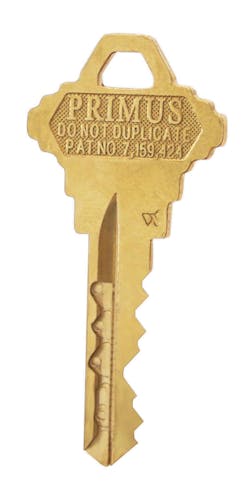
Just like this January, high security was our cover focus in January 2016. Gale Johnson wrote about Peaks Preferred, the patented key system from Kaba Ilco Corp. (a predecessor of the current newer Peaks Plus system). The Master Keying With Medeco article was written back before Medeco purchased SimpleK master keying software. CyberLock provided an article on their electronic cylinder solutions for remote sites. The “Problem Solver: Choosing A Restricted Keyway System” column advocated for patented keyways for effective key control. Our Programming Guide: Standalone Locks gave programming tips for the Codelocks KitLock 1550 Smart, Alarm Lock Trilogy, Adams Rite eForce, Kaba PowerPlex 2000, Marks USA i-Qwik Lite, Schlage NDE, Schlage Sense, SDC EntryCheck and Yale Real Living Series. Allan Colombo’s article, “Exit Alarms: Don’t Leave Money on the Table,” noted that exit alarms serve two purposes. They keep people honest by their mere presence and they help catch dishonest people. Code compliance is also a consideration, especially in healthcare settings. A motorcycle-servicing article showed howHonda motorcycle locks could be picked and decoded with a new Genuine Lishi tool.
20 Years Ago
High Security locks was the feature topic. Tom Gillespie looked at high security locks from a key control perspective. Dale Bowman, Medeco Security Locks, suggested adding high security Locks as an added level of security to an electronic access control system. Jerry Levine discussed the Yale 7000 series exit device which incorporates luminescence to assist in exiting in emergencies. A Ledger article described door pivots of every type. Tim O’Leary looked at new video systems on the market. A Modeye CCTV camera system was the topic of an installation article. Rod Oden asked the question: "Who Owns the Master Key System"? Jerry Levine reported on Detex EAX500 and EAX2500 exit alarms. Gale Johnson was on location as modern exit devices were installed in place of ancient mortise locks. Tiny serviced the unusual lock system on a Range Rover.
Advantages of Patented Keyways
Editor’s Note: The patents and products have evolved, but this Problem Solver column from 2016 by Allegion’s Minu Youngkin still contains valid advice about selecting and selling patented high security keyways.
One of the biggest challenges for any facility manager or building owner is key control. When an employee or tenant returns his or her keys (assuming they return them at all), it’s not uncommon to discover the originals have been replaced with unauthorized duplicates. The owner or manager must then decide whether to incur the cost of rekeying the entire building.
There are several solutions to this problem, many of which involve the installation of electronic access control systems. However, a simpler and more affordable option is to install patented restricted keyways.
As with any security measure, there are benefits and drawbacks to installing restricted keyways, both for locksmiths and their end user customers. For the end user, these are fairly straightforward. They will spend a bit more for each keyway, but offset the cost by reducing the frequency and hassle of rekeying a facility, assuming no keys are lost or break-ins occur.
Not all restricted keyways are patented, but only those that are offer the legal protection necessary to restrict the availability of lock mechanisms and key blanks to authorized locksmiths or locksmith distributors. Part of the cost of these products is enforcement as it is the patent holders’ responsibility to protect their patent rights. Some companies are more aggressive than others in protecting these rights. Also patents do expire and many companies require customers to upgrade or replace expired key systems.
Before choosing a restricted keyway system, ask the following questions:
- What patents apply to the product and when do they expire? How rigorously are they enforced?
- How many distributors have rights to sell the product and where?
- How much exclusivity is available at what cost?
- What special equipment will be needed to service the locks and duplicate keys?
- What are the terms of the exclusivity contract?
- How fast is the supply chain and how easy is the ordering process?
- Does it meet the security and exclusivity needs of the end user?
Read the full article at www.locksmithledger.com/12142177