Paxton Launches Solo Phone-Based Access Control System
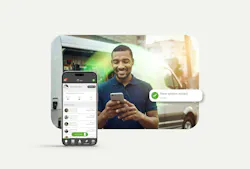
Paxton has launched Solo, a cloud-based access control system that uses a smartphone as both the management platform and the user credential. Designed to simplify installation and reduce costs, Solo eliminates the need for on-site servers, data networks, or dedicated PCs. Installers can manage the entire system through the Paxton Solo app, using built-in smartphone biometrics such as fingerprint or facial recognition for secure, keyless entry.
To support the rollout, Paxton is offering 10,000 free Solo starter kits, giving security professionals the opportunity to test the system firsthand. Installers can claim a free Solo starter kit on Paxton's website, allowing them to try the system and see how it can work for their business.
The system was developed with installer feedback in mind, emphasizing ease of use and scalability. Despite its simplicity, Solo meets high cybersecurity standards, achieving IASME Level 1 and 2 certifications as well as UL IoT Cybersecurity Diamond certification following third-party testing.
Adam Stroud, Paxton’s CEO, said: “Solo is different. It is the first system that fully utilizes the modern capabilities of a smart phone. By doing so, it creates a step change to the architecture of modern security. Solo is a complete re-imagining of how networked access control is achieved. Because it is so different, we want as many installers as possible to see it, use it, and understand it.”
Solo combines the straightforward installation of a standalone system with the capability of networked access control. There is no requirement for an on-site data network, server or centralized PC. The system is created and managed entirely from a smartphone. Using the phone’s built-in biometric ID, such as fingerprint or facial recognition, Solo provides secure, convenient access without cards or fobs. Centralized administration, event reporting, and real-time activity logs are all available directly on the Paxton Solo app, making real-time visibility and management fast, flexible, and intuitive.
Costing a fraction of a traditional access control system, Solo makes professional security viable for sites where it was previously cost-prohibitive. With minimal hardware and no network infrastructure required, installations are quick and efficient, enabling installers to fit more in a day.
The cloud-hosted model also provides built-in flexibility; offering the option to fit and forget or establish straightforward, recurring revenue stream.
“Solo is not the first cloud-based access control system; however, it takes the concept to a new level by making full use of cloud and mobile phone technology. By doing this, the equipment being installed can be dramatically simplified, while still providing flexible access control to the highest security standards,” Stroud said. “Additionally, by supporting a service-based model, we can offer installers a choice regarding the ongoing support they provide to customers.”
All that is required for a Solo system is a Solo DoorTag, Solo Controller, power supply, electronic lock and the Paxton Solo app.
Operating independently from a fixed on-site data network, Solo is suited to a huge host of environments where traditional networked systems would be impractical, such as. small independent businesses, residential settings such as short-term rentals and student accommodation, and healthcare environments including clinics and care homes. Solo is equally suited for gyms, lockers, bike storage facilities, gates and remote buildings, as well as temporary installations such as building sites where fixed data infrastructure is unavailable or impractical.
“Solo is designed to be installed independently of a customer's IT network. The installation takes a fraction of the time required for a traditional system. Coupled with the highly competitive nature of Solo, this gives installers the ability to win more quotes, and the ability to install more systems without increasing the size of the team,” Stroud said.