Multifamily Security Trends
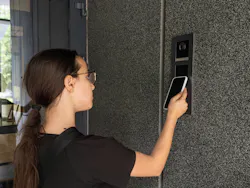
From upgrading mechanical locks to adding electronic access control options, the multifamily (MTF) sector continues to offer big sales opportunities to both locksmiths and security manufacturers and distributors. In the recent Locksmith Ledger webcast, the panel looked at trends they are seeing in this area, from new construction to the continued demand for retrofit solutions that require the expertise of locksmiths.
The subject matter experts for this discussion included Glenn Younger, owner, Grah Safe and Lock, Wayne Winton, owner, Tri County Locksmith Service, Jay Rawls,
Residential Business lead, North America, Salto, Chris Donohue, director of Sales, NAPCO Security Technologies' Alarm Lock Division, and Melissa Bazala, Building Materials Supply Channel, Banner Solutions.
The big takeaway from the webcast is the multifamily market is transitioning from a hardware-driven business to a software-enabled service model, and locksmiths who develop expertise in electronic access control, cloud management, system integration, and customer consulting will be best positioned to capitalize on this shift.
Locksmiths’ Perspective
Looking at the top trends for locksmiths, both Younger and Winton are seeing more opportunities, from new construction to retrofit jobs.
"We started as a commercial company, and at first we were a little skeptical of multifamily housing because traditionally that had been such a low margin, low-cost area,” says Younger, who points out that since COVID, there has been a record number of units being built. “This year is going to go down as the largest number of apartment units coming online. With that, there are lots of new units that tend to have a higher rental rate, so rent from 2020 until today is up about 20%. People complain about their rent rising but residential real estate in the same time period from 2020 till now is up 40%. So rental is becoming a more affordable option for a lot of people, even though they are going up."
In addition to new buildings being built, the “retrofit apartment market is set to really boom,” says Younger. “While new apartment units are being built and get filled up, that means there's a vacant one somewhere else. And these older units are going to have to become more competitive. And I don't think they can just win purely at a lower price as they're going to have to offer some of the services that the newer buildings are offering."
As Younger points out, renters who are moving into both the new units and existing ones are looking for “all the extra services that they offer, including what they offer in terms of one key to get into the main part of the building and common areas and smart locks, as Wayne started to mention. So rent is up, which comes with, is one of the results of higher levels of expectation of extra services."
Both Winton and Younger noted that the variety of units that are coming online are broader than ever, and that includes MTF that is primary residential units, as well as college and university housing units that “are at an all-time high pace,” says Younger. “I'm looking at this from San Diego. I know the three major colleges within 10 minutes of me all have been in full building mode. And those units use and they need locks that are not really like hotel locks – they need a more of a multifamily housing type of lock."
Winton adds that with the continuing evolution of keypads and smart locks, the security market is adapting to the needs of different verticals like multifamily.
"Now the locks themselves are smart, they are intelligent, and with AI put into the software and into the operating systems that actually run these locks to where now we can pair them with cameras,” Winton explains. “That was one of the big things that I saw at the ALOA trade show and convention was locks with two cameras: one that looks at the person and then one that looks down at the package, or anything that could be set down below."
As Winton points out, people are demanding more from their lock, especially within verticals like multifamily and education.
“They want to be able to monitor it with their phone,” he says. “They want to be able to utilize a camera … be able to see who's coming and going. They want to issue temporary keys for maintenance personnel. And they just basically want convenience, and they want information and real time data. And that is really hitting the industry right now. People really don't want to deal with batteries; they want them to be maintenance free. People don't want to change batteries every six months or a year, and they just want it to work."
Because locksmiths have such specialized knowledge about which systems to use, Younger and Winton believe there is a tremendous amount of opportunity within the multifamily space.
“Contractors don't know which systems to use and are going to work properly, yet there's so much information out there and there's so many products available, that I really feel we can use that to our advantage,” says Winton. "Our value, the life safety knowledge, the fire door knowledge, the hardware knowledge and the fire code and building knowledge are really where our value is. We must understand where our value is in order to place a dollar amount on that value. So, working with contractors that are putting these high-rise buildings up and putting these apartments up is really where I'm seeing the majority of growth coming from."
Manufacturers’ and Distributors’ Perspective
Continuing the conversation on overall trends, smart lock adoption has “hit an inflection point,” says Rawls. “Data shows it has more than doubled from 2022 to 2024, but I think it's only picked up since. It used to be that you'd see it in Class A, nice, fancy buildings, towers, mid-rise buildings. Now, though, we're seeing it showing up more in Class B and C retrofit deals, affordable deals."
Rawls agrees with Winton and Younger on customer expectations, as the user experience is becoming a key factor for many who are making decisions and operating these multifamily units.
"What has been huge that we've seen across all the customers that I've talked to and my experience as well is the end user is this desire to find solutions, particularly for guest access,” explains Rawls. “That includes food delivery, grocery delivery, package delivery to the building, which have grown just exponentially. So, there's this need for building owners and operators to get delivery drivers through sometimes multiple doors."
Property owners are also looking to now consolidate to a single app, to a single dashboard of platform to see all their systems and data.
“The pain isn't usually necessarily the lock,” notes Rawls. “It's just a lot of folks I talk to are managing four or five disconnected systems. They've got one system for the gate, the parking gate, one for the unit door, one for the amenity and common doors. They're having to program, hopefully, a single fob, but in three different systems. The ask that we're getting now more often from ownership groups is to give me one platform from the curb to the unit door, not another point solution. A solution from a credential standpoint can serve every door and gate in the building along with the unit door."
Donahoe agrees, noting that end users are looking to simplify things and consolidate the number of platforms they deal with, which, as mentioned, range from tenant access control to visitor management to concierge services, for example.
"A lot of times we're seeing end user requests on how can I add a temporary credential for my dog walker who's going to come to walk my dog while I'm at work, so they can come in and grab the dog and take him for a walk,?” Donohue explains. “The end user doesn't want to have twenty different applications to do this."
The continuing challenge now with smart lock adoption is having them work with all the different platforms often being used at one location.
“The big difficulty for manufacturing comes into play because there's so many different languages and so many different software systems that are out there, so trying to get them to play together on one app is a challenge,” explains Donohue. “You have a gate company doing the gate access, an access control company doing the building access, and a hardware company doing all the door frames and smart locks. Getting all of those people to talk together on an installation sometimes can be difficult."
Looking at the distributors’ perspective, Bazala says is important to convey “that idea of the lock that someone chooses for their building needs to be agnostic. The gates, all that stuff has to be agnostic so that it can work with these third-party softwares and aggregate and all of that stuff so that you have kind of a unified single platform that the homeowner or the property manager gets to use.”
She continues, “From our perspective as a distributor, we see more in terms of being able to get quotes or installation of certain manufacturer products, and we see more of a requirement to become a certified installer. Sometimes that certification is brand specific, sometimes it's general, but that's an area where if you're a locksmith now and you're not certified, that will become important, and more important as time goes on."
Another trend that Bazala is seeing is jobsite fragmentation within multifamily.
“If there's a project, somebody's getting the quote or the ask to provide the unit locks ... somebody else might be getting the interior locks ... somebody else might be doing mailboxes, storage facilities, or common areas,” she explains. “The building material side is trying to consolidate and wants to own the whole jobsite. But right now, there's still room in there to find a niche that works for your company. I think there's an opportunity there."
Note: This is part one of a two-part article on the Locksmith Ledger multifamily webcast, with part two delving deeper into how locksmiths are getting and profiting from these jobs.
[sidebar]
Key Multifamily Webcast Discussion Takeaways
· Multifamily housing is rapidly adopting integrated smart security systems, with property owners seeking unified platforms that combine smart locks, mobile credentials, cloud management, video, and access control rather than standalone hardware.
· The role of the locksmith is evolving from traditional lock service to trusted security consultant, requiring expertise in technology integration, system design, code compliance, and long-term customer support.
· Retrofitting existing apartment communities is one of the industry's greatest growth opportunities, as older properties upgrade their security systems to remain competitive with newer developments and meet rising resident expectations.
· Property owners are prioritizing solutions that consolidate multiple security and building management functions into a single, user-friendly platform.
· Long-term profitability comes from ongoing service relationships rather than one-time installations, creating recurring revenue opportunities through software management, credential administration, maintenance, and continued system support.
About the Author
Paul Ragusa
Senior Editor
Paul Ragusa is senior editor for Locksmith Ledger. He has worked as an editor in the security industry for nearly 10 years. He can be reached at [email protected].