The New, or Old Frontier for Access Control?
Key Highlights
- Most organizations are moving towards integrated, unified identity platforms to improve security, visibility, and operational efficiency across physical and digital environments.
- Mobile credentials are increasingly adopted for security benefits, with a focus on multi-factor authentication, while physical credentials still coexist in many sectors for operational flexibility.
- Biometric technologies like fingerprint and facial recognition are gaining momentum, but privacy and ethical concerns are now at the forefront, prompting stricter safeguards and compliance measures.
- Real-time location solutions and RFID are expanding in healthcare, manufacturing, and logistics, enhancing asset tracking and operational intelligence despite some barriers like cost and privacy issues.
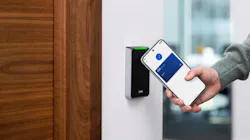

For the longest time it seems we have been talking about the convergence of the physical and logical or digital within security. What started about 10-15 years ago as a conversation about where the security industry is headed is now a conversation about what is possible and achievable today within an organization. Identity – and identity management – is still at the heart of the matter, as security professionals, manufacturers and end users rethink their approach to access control, from doors to data.
Physical and digital identity convergence is accelerating, and unified identity solutions are moving mainstream, with 75% of organizations either having deployed (29%) or actively evaluating (46%) unified identity solutions, according to the HID 2026 State of Security and Identity Report, which is based on insights from more than 1,500 security and IT professionals, end users and industry partners. While single credentials spanning buildings, networks and applications deliver efficiency and stronger security, budget constraints (51%), complexity (37%), and expertise gaps (34%) remain persistent barriers.
“The convergence of physical access is coming from or is being driven mostly from the digitalization initiatives across many organizations,” says Ramesh Songukrishnasamy, Senior Vice President and Chief Technology Officer at HID. “You have probably heard the term ‘zero trust’ in the IT security and cybersecurity space. And that is really driving the need for extra checks and balances and making sure that the person who is logging in onto this device from this place is actually the same person who came through that door, right? And then you know if you're if you're accessing some sensitive information in an application or even when you are inside an area, you know that it will require additional authentication.”
The research shows that security leaders are focused on how to manage identities in ways that build trust, strengthen protection and preserve user choice across increasingly converged physical and digital environments. In fact, nearly three-quarters of respondents (73%) identified identity management as a top priority, the highest category in the study, as organizations move beyond standalone credential systems toward unified identity governance that spans physical access and digital systems. The shift reflects a market-wide consensus: the question is no longer whether to consolidate identity platforms, but how to do it in ways that reduce friction, ensure compliance and deliver measurable return on investment (ROI).
Investment patterns are also shifting decisively toward integrated platforms, as the era of point solutions is ending, with the HID report showing that organizations are prioritizing integrated identity and security platforms over standalone point solutions to improve visibility, efficiency, and resilience across increasingly complex environments. Integration complexity, though, persists as the primary barrier – 52% for identity systems and 37% for physical-digital convergence.
Mobile Credential Adoption
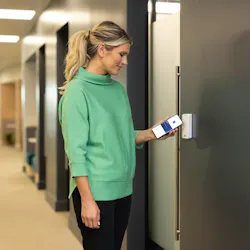
Mobile credentials adoption is now driven by security improvements (50%) rather than convenience (34%), a notable shift as organizations recognize the protection advantages of mobile credentials, according to the HID report. Hybrid credential environments remain standard, with 84% of end users maintaining physical credentials within their mobile deployment, reflecting diverse user groups and operational needs that require flexibility over time.
Mobile credentials are becoming much more ubiquitous, especially in areas like multifamily and higher-ed, where the user-experience is a key driver.
“We are seeing an increasing adoption of mobile credentials, but at the same time I would say that the percentage of customers who are switching to pure mobile or mobile-only is not that significant,” says Songukrishnasamy. “I think it's getting adopted well because obviously the technology is maturing and their experience is better and people are getting used to having multiple things in their phone. And for some of the tech savvy employees, they prefer convenience and are willing to use the phone.”
As people use their phone more in their everyday life, from boarding passes to payment to concert tickets, using mobile for access control is becoming more acceptable and widespread. “For those who have gotten used to that kind of ecosystem or experience, this is very similar,” he says. “So having a physical access credential in my wallet or an app and in my phone, I'll use it if I can.”
While mobile access is gaining traction, physical identification is still being used by some companies in tandem with electronic access control options and readers.
“We still see companies such as banks requiring ID badges to be displayed, so sometimes even within a company or in a facility, you may end up in having to use the physical card,” he explains. “Mobile access is increasing in adoption, but we also see that it's coexisting or in tandem with some form of physical credential.”
While tech-savvy verticals are leading the mobile movement, HID has been “preparing our customers for a number of years telling them that their reader infrastructure needs to support the future trend, and the future trend is mobile,” says Songukrishnasamy. “So that is one of the reasons why people use HID readers because it gives them that assurance and longevity of their investment to withstand or go through some of these new technology generations.”
Because the mobile credential has additional security built in when establishing identity, he sees the continued growth of this mixed-use environment where the phone is part of a multi-factor authentication process.
Biometrics Gain Momentum
The research also shows that biometric technologies continue to gain traction (45% view them as strategic), with fingerprint (71%) and facial recognition (50%) the leading modalities. While there is an increase in adoption of biometrics, ethical and privacy concerns more than doubled year-over-year from 31% to 67%, which is driving organizations to implement safeguards and reinforces the need for transparency and compliance during deployment.
Songukrishnasamy points out that in addition to people becoming more educated on the ethical use of biometrics, education is also happening in real life, from accessing our phones to getting through the airport.
“It's a reflection of where else I'm using it, and if I am I comfortable with it,” he says. “We all use facial identification and other forms of biometrics in in our daily life, whether it is touchless TSA or Clear, or with your boarding gate experience. There used to be a lot more concern about facial biometrics, but now there are many use cases that leverage this experience, so they see the benefit. For example, they see the benefit of not having to take out their card and then having to tap it whereas you can just walk to the door and it recognizes you and opens.”
As he points out, the industry is helping to educate organizations on the need to be compliant with the regulatory requirements.
“It’s about ensuring their privacy and giving that assurance to the users that their biometric information is safe, and it is only used in that context,” says Songukrishnasamy. “We've been in this industry for quite a long time and proven here at HID to be a company that pays extra care and attention when it comes to biometric templates and ensuring regulatory compliance.”
While fingerprint biometrics are still widely used in access control, facial and palm are beginning to be more readily adopted.
“Right now, fingerprint is still the predominant use case as far as access control is concerned, but there are places where the face is used where the touchless experience is much improved, of course,” Songukrishnasamy explains. “Now I can use my face to authenticate me and to gain access through this door, or access certain data, or do certain activities, for example. And with people today not comfortable in touching all the surfaces unnecessarily, the challenge becomes how do we enable that detecting of the face with that expressed intent of the person using that technology.”
Real-time location and RFID Top Trends
Real-time location solutions (RTLS) adoption continues to expand, particularly in healthcare, manufacturing and logistics. The report shows about 42% of end users identify RTLS as a strategic priority, while 40% report active deployments. Barriers do persist exist, though, with costs (33%), privacy concerns (29%) and integration complexity (29%) slowing progress. The remaining 38% of partners report customers remain unfamiliar with RTLS capabilities, signaling substantial educational needs.
RFID adoption also continues to grow steadily, with the report noting, “RFID is now infrastructure, not innovation.” In fact, 54% of respondents report active use for asset tracking, inventory management and loss prevention. Once viewed as niche technology, RFID is now increasingly treated as core infrastructure for asset visibility, inventory control and operational intelligence. Security leaders cite faster tracking (62%) and improved visibility (41%) as key benefits.
Ethics and Privacy Concerns Still Remain
Beyond individual technology trends, the report highlights an overall defining concern for 2026, which is ethical considerations and privacy concerns, which are at an all-time high.
As noted for biometrics, 67% of end users expressed high or moderate concern about ethical and privacy implications, but the concern is not just about biometric data.
“Alongside location tracking and converged identity platforms, organizations are navigating the tension between stronger protection and individual rights,” according to the report. “Many respondents report actively developing policies, governance frameworks, and technical controls to address these concerns, signaling a broader maturity in how security decisions are made.”
The full report can be downloaded at https://www.hidglobal.com/documents/hid-2026-state-security-and-identity-report.
About the Author
Paul Ragusa
Senior Editor
Paul Ragusa is senior editor for Locksmith Ledger. He has worked as an editor in the security industry for nearly 10 years. He can be reached at [email protected].