The Digital Evolution of the Doorway
Key Highlights
- Traditional lock-and-key security has evolved into complex digital systems requiring knowledge of encryption, communication protocols, and cybersecurity fundamentals.
- The shift from Wiegand to OSDP enhances security through AES-128 encryption, two-way communication, and real-time tamper detection, reducing vulnerabilities.
- Cloud-based and edge processing systems enable remote management, faster authentication, and increased system resilience, making locksmith skills more tech-centric.
- Frictionless, mobile-first access solutions improve user experience and operational efficiency, aligning security with convenience in today's digital landscape.
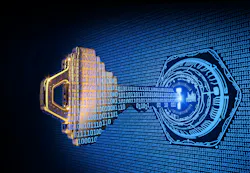

The smell of graphite and the rhythmic grinding of a key-cutting machine once defined the atmosphere of the locksmith shop I grew up in. Decades ago, our family-owned business was a place where the craft was measured in the precision of a file and the tactile click of a tumbler falling into place. In those days, the world was simpler. Security was a physical contest: a battle of steel against steel, where the primary objective was to ensure a door could not be forced, picked, or shimmed.
As the calendar has turned to 2026, those who once focused solely on the mechanical have found themselves at the center of a fundamental paradigm shift. The modern entrance is no longer just a physical barrier; it has become a sophisticated digital gateway. Today, the security of any facility, be it a high-rise corporate headquarters or a local apartment complex, is only as strong as the data-level protection of its credentials and the integrity of the invisible signals pulsing through the wires hidden behind its walls.
This evolution has fundamentally redefined the profession. The modern security professional has transitioned from a mechanical technician into a data security specialist. The threats they face are no longer just crowbars and lockpicks; they are credential cloning, communication “sniffing,” and complex network-level intrusions. To protect the modern perimeter, one must understand that the “lock” is now a computer, and the “key” is a packet of encrypted data. By integrating advanced communication protocols with mobile-first, interoperable ecosystems, the industry is not just updating its tools; it is entirely redefining what it means to be “secure” in a connected world.
Here are six trends leading the charge in access control today — the practical changes every locksmith should know.
1. The Silent Language of the Walls
For nearly forty years, the industry relied on a silent language known as the Wiegand protocol. It was the undisputed standard for communication between a card reader and a door controller. However, in the context of 2026, Wiegand has become outweighed by advancing technology. Its primary deficiency is a lack of encryption and a primitive, one-way communication style. In a Wiegand system, the reader simply “shouts” a credential code at the controller, which listens passively. There is no verification and no back-and-forth dialogue. In a world of evolving sophisticated, lower-cost hacking tools, this can be the equivalent of shouting a password across a crowded room.
The vulnerability is alive: a bad actor equipped with a “sniffer” tool can tap into the wiring behind a reader and intercept the raw data of a card in “plain text” the moment it is swiped. This realization has fueled the rapid obsolescence of legacy systems and the rise of the Open Supervised Device Protocol, or OSDP. As the new gold standard, OSDP utilizes standard-based AES-128 encryption. This helps to ensure that even if an intruder were to gain physical access to the wires, the data flowing through them would be an unreadable, useless jumble of characters.
But OSDP offers more than just a shield; it offers a voice. Unlike the one-way signal of the past, OSDP enables a continuous, two-way conversation between the reader and the controller. This “supervised” aspect is a game-changer for facility management. In the old days, a reader could be smashed or lose power, and the system might not realize it until a frustrated employee reported a malfunction. With OSDP, the controller monitors the reader’s health in real-time. If a reader goes offline, loses power, or experiences a malfunction, the system knows instantly. This intelligence even extends to tamper detection. Historically, detecting if a reader had been pulled off the wall required dedicated tamper wires and additional labor. OSDP incorporates this into the primary data stream. If the communication is interrupted or the device is tampered with, the system registers an immediate alert. This streamlined approach reduces installation complexity while significantly enhancing the security posture of the entire perimeter.
2. Cloud-Native Access Control
The locksmith’s trade is evolving from a focus on mechanical hardware to managing electronic and smart locks through cloud platforms. Modern access control systems are increasingly cloud-based, enabling remote management, real-time monitoring and credential provisioning without the need for on-site visits. As a result, locksmiths are working more with systems that integrate door readers and controllers with security software, allowing for centralized visibility and automation across multiple sites. This shift requires familiarity with cloud services, integration patterns, and the operational workflows that cloud platforms introduce.

3. Edge Processing for Real-Time Decisions
Alongside cloud management, intelligence is moving to the edge. Reader-controller edge devices, such as door readers with built-in processors, handle authentication locally, which reduces latency and lowers dependence on continuous internet connectivity. Local processing is critical for fail-safe operation so doors can continue to function even when the cloud connection is interrupted. Edge devices are capable of processing RFID, NFC, and mobile credentials on-site, enabling faster decisions and preserving user experience.
Security remains a central concern in both cloud and edge layers. Modern edge devices implement strong encryption protocols (for example, TLS and AES) and embrace zero-trust principles, meaning every device and user must authenticate and be authorized regardless of their network location. For locksmiths, this technical convergence means that understanding cybersecurity basics—proper configuration of encryption, use of encrypted credentials, wiring communications and more — is now as important as mechanical skill when designing, installing, and maintaining contemporary access control systems.
4. The Modernization of the “Key”
As the communication protocols have evolved, so too has the very concept of the “key.” It is no longer a piece of metal or even a simple proximity card. It has become a sophisticated piece of encrypted technology. Security professionals are now leading the charge in moving clients away from legacy 125 kHz proximity cards. These cards, once the industry standard, have shown to be cloned using inexpensive handheld devices that are readily available online.
The transition to modern smart cards has introduced high-level encryption algorithms that are highly resistant to cloning, copying, or “replay” attacks. These cards do not just “shout” a code; they engage in a secure, digital handshake with the reader. This process helps to ensure that the credential being presented is authentic and has not been intercepted or duplicated. However, even the smart card is facing competition from the device we carry in our pockets every day.
The year 2025 was widely dubbed the “year of the mobile credential,” and that momentum has only accelerated. By leveraging Near Field Communication (NFC) stored in digital wallets, security professionals can offer a solution that is both more convenient and more secure than any physical card. Mobile credentials benefit from the phone’s existing security architecture. A lost card can result in a security breach, but a lost phone can be protected by Face ID, fingerprint scans, and PIN codes. Because the range of NFC is extremely short, the window of opportunity for an attacker to intercept the signal is reduced to a level that makes occurrence extremely unlikely.
To mitigate the risk of lost or stolen credentials even further, there is a growing trend toward Multi-Factor Authentication (MFA) at the door. Much like logging into a bank account, entering a high-security area now often requires two or more factors for entry. This might be a smart card plus a biometric scan, or a mobile ID followed by a PIN entry on a keypad. This layered approach helps to ensure that a single compromised credential does not grant a thief access to the building, effectively neutralizing the threat of a stolen “key.”
5. Digital-First and the Frictionless Journey
As we look deeper into 2026, the demand for “digital-first” experiences is reshaping how access points are managed. End users, from corporate employees to apartment residents, now expect their access control systems to work as intuitively as the apps on their smartphones. They want a system that provides an additional level of biometric protection, including facial identification, but they also want that system to be invisible.
Modern systems are increasingly leveraging built-in Wi-Fi and Bluetooth capabilities. This allows for cloud-based management and mobile provisioning, enabling facility managers to grant or revoke access rights instantly from anywhere in the world. This connectivity is achieved without the need for extensive, invasive wiring, making the systems more responsive, scalable, and user-friendly. In the current market, delivering a seamless, mobile-first solution is no longer viewed as a luxury innovation; it is a standard expectation.
This shift toward user-centricity has led to the rise of “frictionless access.” Imagine a student navigating a university campus or an employee entering a high-security office. In the gold-standard model of 2026, that user can keep their phone in their pocket and have the door unlock automatically as they approach.
This is not just about convenience; it is about security compliance. By reducing the “friction” of security, organizations actually improve their safety profile. When a system is intuitive and easy to use, people are far less likely to prop doors open or find workarounds for cumbersome systems that slow down their day. Access control is no longer deployed solely for compliance or perimeter protection; it is now a reflection of an organization’s operational efficiency.
6. The Foundation: Wiring Best Practices
Despite the move toward the cloud and wireless signals, the physical layer remains the foundation upon which all digital security is built. To achieve the high level of security and connectivity required in 2026, installers must adhere to strict wiring best practices. The integrity of the physical layer is what supports the digital security; if the wires are weak, the encryption doesn’t matter.
For credential readers, the use of shielded cables is essential. This prevents electromagnetic interference that could compromise data integrity or cause frustrating system errors. The OSDP interface itself relies on RS-485 twisted-pair wiring to enable the secure, encrypted, bi-directional data flow required for modern standards. Even the electronic locking devices, the mechanical muscles of the system, must be handled with precision. Using 2 or 4-conductor cables helps to ensure the system can handle both the power load and the signal transmission required for secure, reliable locking.
A Roadmap for the Future
For security professionals looking to help future-proof their operations and provide the highest level of service, the path forward is clear. It begins with an assessment of current infrastructure to identify gaps in interoperability and legacy Wiegand systems that are ripe for an OSDP upgrade. Transitioning to open, standards-based systems should be the priority.
Next, the user experience should be placed at the center of every decision. Exploring mobile credentials and frictionless access solutions is not just about staying trendy; it is about increasing satisfaction and overall security compliance. Integration is the next step—ensuring that any new system can connect with broader security, building management, and operational platforms.
Furthermore, professionals should evaluate new service models. The benefits of bundled, cloud-based, or subscription solutions provide clients with greater flexibility and scalability than the rigid models of the past. Finally, staying informed is key. The pace of innovation is accelerating, and the successful strategies of 2026 are those that keep abreast of emerging technologies such as Artificial Intelligence (AI) and Internet of Things (IoT) integrations.
Innovation is no longer just about adding “new features”; it is about empowering organizations to manage access intelligently in an increasingly connected world. As physical and digital security continue to converge, access control has moved from the edge of the security conversation to the very center. By focusing on the security of both the encrypted credential and the physical communication wire, the modern security specialist ensures that the “key” to the building remains in the right hands, protecting the doorway and the data with equal vigilance. The family locksmith shop may have changed, but the mission remains the same: keeping the world safe, one opening at a time.
About the Author
Mike Gaines
Mike Gaines is Product Manager, Readers, for Allegion.