The Future is on Your Phone
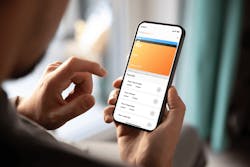
By leveraging devices that people already carry on a daily basis, security experts can deliver convenience while strengthening security and looking out for the world around us. For those reasons, Mobile credentials aren’t just a trend that will come and go; they’re the future of access control.
When was the last time that you forgot your key fob or access card at home? It was probably more recent than you’d like to admit, and you likely had to go through the hassle of asking someone else to let you in or returning home to retrieve your credential. Now think: when was the last time that you forgot your phone at home?
Today, people carry their mobile devices with them almost constantly, and being without a mobile device has become a significant cause of worry and stress. In a day and age when it has become so prevalent for people to carry their mobile phone at all times, wouldn’t it be nice if you could just use your phone as your access credential? No need to carry around additional fobs or cards that could easily be forgotten, misplaced, or stolen — everything you need to access your most critical spaces could just be right there on your phone.
Great news: you can do just that! Let’s talk about mobile credentials.
The Convenience of Mobile Access
Mobile credentials are digital keys that allow users to gain access to a secured space using their personal mobile device. These credentials are rapidly growing in popularity, primarily due to their enhanced convenience and ease of use.
A 2025 poll organized by ProdataKey revealed that a majority (68%) of access control integrators identify mobile credentials as the most convenient credential option available today. A large reason for this is the fact that the credential resides on a mobile device itself, rather than on an external physical device. This means you have one less thing to remember to carry around at all times — and in a world where phones have become so prevalent, the odds that you already carry your phone with you 24/7 are quite high.
Which type of credential is most convenient for you?
Mobile Credential 68%
Prox Card 3%
Key Fob 27%
Wristband 2%
Additionally, unlike physical credentials such as 125 kHz prox cards or 13.56 MHz fobs or cards, mobile credentials can be created and distributed to users remotely. This eliminates the need for administrators to pass off credentials in-person, saving both time and effort for admins and end-users alike. Additionally, some mobile credentials allow users to lock and unlock doors entirely remotely. This makes it easy to grant access to approved visitors outside of operating hours, such as maintenance or delivery personnel, without being on-site at all times.
Smarter Security in Your Pocket
Mobile credentials today utilize Bluetooth Low Energy (BLE) or Near Field Communication (NFC) to communicate with an access reader. Both of these communication protocols are encrypted, ensuring that sensitive credential information cannot be read, cloned, or intercepted by bad actors.
Beyond encryption, mobile credentials significantly reduce common security risks associated with traditional access methods. Credential sharing is a persistent vulnerability when users lend cards or fobs to others — but people are far less likely to share a credential when it lives on their personal mobile device. In a similar line of reasoning, people are less likely to misplace their mobile phone than a key fob or access card, reducing the risk of credentials getting into the wrong hands.
Mobile credentials also offer an advantage when access needs to be revoked. If a user loses their phones or leaves an organization, administrators can easily deactivate that credential remotely — no need to retrieve credentials or rekey locks.
A Sustainable Option for a Safer Tomorrow
In addition to convenience and security, mobile credentials offer a notable environmental benefit. Physical access cards and fobs are typically made of plastic and require a significant number of resources to manufacture, ship, and distribute. As organizations and their access needs grow, their environmental footprint will grow exponentially if their security ecosystem relies solely on plastic cards and fobs.
Alternatively, a shift towards mobile credentials allows organizations to grow without significantly increasing their environmental footprints. According to a 2024 report from HID, mobile access results in the depletion of 83% less fossil fuel resources than ISOPRox PVC cards. By reducing plastic waste and fossil fuel consumption in the production and distribution stages, mobile credentialing supports modern sustainability initiatives without compromising on functionality.
About the Author
 Brach Bengtzen
Brach Bengtzen
Brach Bengtzen is the VP of Marketing at ProdataKey (PDK), providers of industry-leading cloud-based access control solutions. With over 13 years of experience in the industry, he is an expert in access control trends and security solutions that stand the test of time.