Tools for Servicing Interchangeable Cores
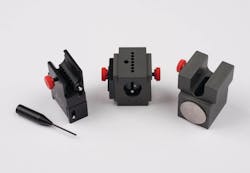
The small-format interchangeable core (IC) is regarded as the “universal” lock mechanism throughout the commercial door hardware industry. Servicing interchangeable cores require specialized tools to ensure smooth operating locks and keys, than conventional lock cylinders. The core tolerances are much tighter. The pin diameter is smaller, .108” diameter versus .115” diameter for conventional lock cylinders. To cut a key requires a 90-degree included angle cutter, and cores are not as forgiving as conventional lock cylinders.
Just some background information: Best developed the A2, A3 and A4 systems to provide expanded keying options when setting up their interchangeable core systems. The A2 system is based on a .0125” increment between the pins lengths. The A3 system is based on a .018” increment. The A4 system is based on a .021” increment.
For this article, unless otherwise specified, I will be discussing interchangeable core products based on the Best A2 system. When discussed, I will list manufacturers alphabetically.
Manufacturers of interchangeable cores include Arrow, Best Access, Best Security, Corbin Russwin, CX-5, DORMA, Falcon Lock, GMS, Ilco, KSP, Medeco, Mul-T-Lock, PDQ, Sargent Lock, Schlage Lock, Ultra Security and Yale Lock.
Some of these manufacturers offer higher security and patented key control. These specialized cores are manufactured to the basic outside dimensions allowing interoperability between manufacturers interchangeable core lock housing products. For example, Medeco has KeyMark Interchangeable Core. CX-5 has the Waved Security Groove. Schlage has the Everest.
Depending upon the manufacturer and the key material, there are three different pin types for interchangeable cores.
- Flat nose, nickel silver material pins designed specifically for Best Interchangeable Cores.
- Nickel silver material with the radius blended into a +/- .015” flat nose for all other interchangeable cores except BEST.
- Brass IC pins with a radiused nose for Interchangeable Cores that will be operated with brass keys.
The pin shapes and composition materials affect the operation and life expectancy of interchangeable cores and the keys. The recommendations are to use brass bottom pins when the cores are operated by brass keys. Use nickel silver bottom pins when using nickel silver keys. This will optimize the life expectancy of the keys and the cores. Top pins, build-up pins and master pins are normally brass.
Pinning kits are available from the core producers and LAB. LAB offers different styles of rekeying kits including steel, wood and polyethylene containing varying quantities of pins. The bottom pins are brass or nickel silver depending upon the kit.
Early Best and Falcon manufactured interchangeable cores used a plate-style spring retainer like most conventional mortise cylinders to retain the springs and pins in each pin chamber. Over time, the design changed to individual pin chamber caps, eventually replacing the plate style spring retainer.
There are two different sizes of pin chamber caps for interchangeable cores. Stamped pin caps are .1185” diameter and machined pin caps are .117 +/- .0005 diameter. Stamped pin caps are manufactured of a softer brass.
SPECIALIZED TOOLS
Specialized tools are required to service or recombinate the core. There are tools that are single function such as loading, unloading or capping the pin chambers. Unloading tools, commonly known as “Dump” Tools, operate with an ejector pin. These products are designed to remove the pin chamber caps, permitting the springs and pins to be removed. Some have an attachment that captures the content of each pin chamber unloads separately and in order. This permits decoding the pins to determine the operating key depths of cut and the top master key depths of cut, as well as decoding the control key bitting.
Loading (block) tools hold the cores in place as the pins are loaded into the pin chambers. It is important to always load one pin chamber, test the operation with the operating key, top master key and the control key. If the three keys operate the core, then load the next pin chamber. This way, if one pin chamber does not operate, you do not have to completely unload the core in order to fix the problem.
Coding an interchangeable core requires knowing the top level master key, the operating key and the control key depths of cut. From the three keys, the bottom pin, master pin, build-up pin and the top pin lengths are determined.
Determining Pin Lengths
There are three ways to determine the pin lengths, using the lengths of the pins or the pin numbers. For example, the A2 system has a total stack height of 23 or .397”.
Here are the formulas necessary in order to determine each pin stack:
Control Key Depth of Cut + 10 - Plug Total = Build-Up Pin
Plug Total = Length of the Bottom Pin + the Master Pin (if applicable)
Plug Total + Build-Up Pin subtracted from 23 = Top Pin
Plug Total + Build-Up Pin + Top Pin =23
FYI: The Best A2, A3 and A4 Systems each have a specific value for their pin stacks. The A2 System has a pin stack value of 23. The A3 System has a pin stack value of 16. The A4 System has a pin stack value of 14.
The Ultra Security "QU-I.C-KEY" pin segment calculator contains 16,384 pin segment calculations for a complete dedicated A2 Grandmaster System. It has seven chamber wheels, with each wheel having six sections. Each section indicates a key cut and displays the proper pin segments – (bottom pin, master pins, control pin and build-up pin) for that cut.
LAB offers the EASY WAY I.Core Pinning Slide Chart for A2 System, part number LSC001. This slide chart displays pin stacks for one pin chamber at a time. The top master key cut and the control key cut are positioned. Align with the change key depth and the pin lengths are indicated for master keyed and non-master keyed A2 System pin chambers.
The Ultra Security "QU-I.C-TEST Tool”, part number QTT and "QU-I.C-TEST Adapter", part number QTA, are used to verify that the core is properly combinated. The core is inserted into the "QU-I.C-TEST Adapter" once it has been combinated. The "QU-I.C-TEST Tool” spring loaded brass rods press down into the pin chambers simulating a capped core. The top master key, operating key and control key are tested. Testing will confirm if the core has been properly combinated. The trumpet keys will indicate if any chambers are “hanging up” (shelf problem) when the keys are withdrawn from the core. Inserting a key blank enables comparing all the chambers and determines where the differences are and make the appropriate corrections.
Once the cores have been combinated and tested, the final step is to cap the pin chambers. Capping tools are designed to secure the core while installing the cap. The standard loading tool has a cut-to-cut spacing of .150”. Before capping, look into the tool to be certain the pin chambers align with the tool’s openings.
There are two methods for capping the individual pin chambers: individual capping blocks where one cap is secured into a pin chamber and capping presses that cap all of the pin chambers at one time.
A1 Security offers two styles of capping presses. The CapSaver Press, part number CAP-5, uses a brass strip to form the caps and caps all of the chambers in one operation. Forming the caps eliminates the need to position individual caps onto each pin chamber. The Capping Press Plus, part number CAP-1, caps interchangeable cores and has a separate attachment for dumping.
Combination tools can perform unloading, loading and capping. For example, the LAB Interchangeable Core Annex® that has a slide out code book into which each pin chamber pins, springs and cap unloads. The Pro-Lok® LT340 IC Rekey/Decode/Dump Tool features a removable pin dump receptacle capping cover.
CUTTING IC KEYS
Cutting interchangeable core keys can be difficult. The key blades are thin and when secured with a standard rotary key originating machine vise, they can be secured using too much pressure. This is because the blades are thin and irregularly shaped. Extra force is often exerted out of frustration and in the hope to keep the key blank in proper position in the vise as it is being cut. This problem can also occur when duplicating interchangeable core keys.
This pressure results in the key blade spreading out and becoming misshapen. Under the compression of the key vise, the blade can grow a few thousandths of an inch. Once cut and removed from the vise jaws, the depths of cut in the blade under compression will attempt to reform, resulting in incorrect cuts in the key.
Using a key punch machine designed to originate the interchangeable core keys can eliminate these problems. The key punch machine vise jaw is designed specifically for interchangeable core keys. In addition, the cutter is specifically designed for the origination procedure, having the correct flat and fixed depths and spacing. Standard spacing for interchangeable cores is .150” cut-to-cut. Some security products have different spacing.
The following is a list of interchangeable core key punch machines:
- A1 Security Manufacturing PAK-1C handheld key punch machine
- A1 Security Manufacturing Mean Green Machine GP201-A2
- Best Combinator
- Pro-Lok BP201IC
- Rytan RY2000 A2
Before purchasing a punch machine, make sure the vise jaws are designed to secure the keyway you plan on originating keys. For example, the Pro-Lok BP201IC will originate keys for the A2 System using the A-R, TA-TE and W key blades. The A1Security Manufacturing PAK-1C, Pro-Lok BP201IC and the Rytan RY2000 IC punch machines can be modified to originate A3 and A4 system keys.
Many years ago, Best sold an older style punch machine for the A2, A3 and A4 systems. They were color-coded for easy identification. The A2 system punch machine is red. The A3 system punch machine is green. The A4 system punch machine is orange.
KEY BLANKS & DECODERS
IC key blanks are available from core producers and aftermarket key blank manufacturers. There are more than 30 known keyways manufactured for Best key systems. In addition, other manufacturers offer their own keyways. Depending upon the aftermarket key blank manufacturer, key blanks can be available in different configurations including the standard head and with “Do Not Duplicate” marked into the head. Note: The “Do Not duplicate” key blank marking is not legally binding in many parts of the world.
Key decoders are metal plates with one or more reducing slot used to determine the depths of cut in a key. The key is inserted into the slot along one of the cuts flat. As the key slides, the slot becomes smaller, eventually indicating the depth of cut. Interchangeable core key decoders are available in different configurations. Some have only a single slot, while others have three slots for the A2, A3 and A4 Systems.
Once the cores have been installed, occasionally the control key is no longer available. This results in having to remove a core in order to determine the control key bitting.
A core can be removed several ways. Picking the core to the control shear line is a non-destructive method. However, using standard turning (tension) tools, there is no guarantee the core will be picked to the control shear line. Specialized turning tools that have one or more tabs can be used to pick to the control shear line. Each pin chamber in an interchangeable core has openings from the top to the bottom. Using a turning tool with a tab that extends into the lug sleeve puts turning pressure on the control shear line. To pick the control shear line, use clockwise turning pressure.
There are several manufacturers of interchangeable core turning tools. Peterson Manufacturing offers three styles of IC tension tools, the differences being the thickness of the tool and the keyways they will accommodate. The Type A Tension Tool is designed for the A, C, DD, M, TR, Q, and R keyways. The Type B Tension Tool is designed for the D, B, E, F, G, H, K, and N keyways. The Type C Tension Tool is designed for the wider keyways, such as the E style. Note: When using these tools, insert a wood toothpick into the bottom of the keyway behind the tool to affix the tool in place.
When the core is damaged and the control key will not remove the core, the question becomes: Do I drill the core or the housing? The destructive decision is determined by knowing what you need. If the core is mal-functioning, drill the core. If the housing is expensive, drill the core. To determine the control cuts, it is easier to drill the housing. When drilling the core, remember it is a one time operation.
Drill jigs are available for drilling interchangeable cores. Should you decide to drill, make sure the jig uses drills for the location and size of hole you want. The Peterson Manufacturing IC-DJ, I-Core Drill jig for SFIC cores drills the control shear line.
FMI
For more information, contact your local locksmith distributor or the following manufacturers:
A1 Security Manufacturing. Web Site: www.demanda1.com
Arrow Lock. Web Site: www.arrowlock.com
Best Access. Web Site: www.bestaccess.com
Corbin Russwin. Web Site: www.corbinrusswin.com
CX-5. Web Site: www.cx5security.com/
DORMA. Web Site: www.dorma-usa.com
Falcon Lock. Web Site: www.falconlock.com
GMS. Web Site: www.gmslock.com
Kaba-Ilco Corp. Web Site: www.kaba-ilco.com/key-systems
KSP. Web Site: www.iccore.com
LAB. Web Site: www.labpins.com
Medeco. Web Site: www.medeco.com
Mul-T-Lock. Web Site: www.mul-t-lock.com
PDQ. Web Site: www.pdqlocks.com
Peterson Manufacturing. Web Site: www.peterson-international.com
Pro-Lok. Web Site: www.pro-lok.com
Sargent Lock. Web Site: www.sargentlock.com
Schlage Lock. Web Site: www.schlage.com
Ultra Security. Web Site: http://ultrasecurityusa.com
Yale Lock. Web Site: www.yalelock.com
A2, A3, and A4 Interchangeable Core Pin Sizes and Dimensions
Top Pin, Build-up Pin & Top Pin, Build-up Pin &
Bottom Pin Numbers Bottom Pin Sizes Master Pin Numbers Master Pin Sizes
A2 A3 A4 A2 A3 A4 A2 A3 A4 A2 A3 A4
0 0 0 .110” .110” .110” - - - - - -
1 1 1 .1225” .128” .131” - 1 1 - *.018” *.021”
2 2 2 .135” .146” .152” 2 2 2 .025” .036” .042”
3 3 3 .1475” .164” .173” 3 3 3 .0375” .054” .063”
4 4 4 .160” .182” .194” 4 4 4 .050” .072” .084”
5 5 5 .1725” .200” .215” 5 5 5 .0625” .090” .105”
6 6 - .185” .218” - 6 6 6 .075” .108” .126”
7 - - .1975” - - 7 7 7 .0875” .126” .147”
8 - - .210” - - 8 8 8 .100” .144” .168”
9 - - .2225” - - 9 9 9 .1125” .162” .189”
10 10 10 .125” .180” .210”
11 11 11 .1375” .198” .231”
12 12 - .150” .216” -
13 13 - .1625” .234” -
14 - - .175” - -
15 - - .1875” - -
16 - - .200” - -
17 - - .2125” - -
18 - - .225” - -
19 - - .2375” - -
*.018” and .021” master pins are usually not used because they are smaller than .023”, the accepted value for a single step progression.
About the Author