PACLOCK Private Label Quality Padlocks With Options
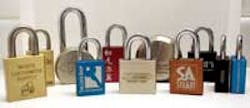
Pacific Lock Company is a manufacturer of solid body and laminated padlocks. Known by the contraction "PACLOCK", Pacific Lock Company constructs their solid body padlocks from aluminum, brass, hardened steel and stainless steel. The aluminum body padlocks are available in anodized finishes. Both sides of the shackle of these solid body padlocks are locked using ball bearings. This family-owned and operated business has been producing configurable and customizable padlocks for more than 13 years.
The PACLOCK solid body padlocks are available with four styles of lock cylinders. The standard is a non-restricted padlock keyway (Ilco A1045/Jet AM7). These brass lock cylinders contain six-pin tumblers and are rekeyable using popular pinning kits designed for padlock rekeying. When this article is published, PACLOCK will have a pinning kit available. In addition to the standard keyway, PACLOCK offers two restricted padlock keyways. Contact Pacific Lock for details.
To satisfy the end user who wants interchangeable core or standard door lock compatibility, there are PACLOCK hardened steel and brass body padlocks that accept figure "8" (S.F.I.C.) interchangeable cores and anodized aluminum padlocks in seven finishes that accept most standard key-in-knob/key-in-lever door lock six-pin lock cylinders.
PACLOCK will personalize their padlocks through the Your Logo, Your Locks™ program. Because the padlocks do not have writing or images on the body, just blank surfaces, PACLOCK can laser engrave up to four sides of a padlock. For example, the front side can be engraved with the customer's information, including their name and location or application description. This is advantageous to your customer, as it not only personalizes the padlocks. An added advantage is the padlocks will have less chance of being "misplaced" as they are easily identifiable. The backside of the padlock can be engraved with your company's logo and information, keeping your company's name literally at the fingertips of your customers.
Laser engraving is available for letters/numbers as well as company logos or job specific drawings. There are no restrictions for the style of font engraved. The only limitation is the size of the padlock body. Note: There is no minimum number of padlocks that must be ordered for the "Your Logo, Your Locks" program. Contact Pacific Lock Company for more information.
The solid body padlocks are produced as non-key retained with a standard shackle material and length. These "base" padlocks can be upgraded by ordering key retaining and/or with different shackle materials/lengths. These features can be factory installed or field installed by you to meet your customer's requirements.
Conversion to or from key retention requires changing the actuator. There is only one model of retainer for all the rectangular solid body padlocks. To change the actuator, the lock cylinder must be removed, which requires the cover plate to be removed. To remove the cover plate, the security screw must be removed from the security nut.
Note: To change the bitting, follow steps one through three.
To remove a non-key retained actuator from a rectangular solid body padlock:
Step 1. Unlock the padlock shackle and rotate out of position.
Step 2. Use a Phillips head screwdriver to remove the security screw at the base of the shackle hole.
Step 3. Slide the cover plate with the security nut out of the padlock body. The lock cylinder should slide out of the body. Do not let the plug rotate 180 degrees within the lock cylinder. Immediately remove the key from the lock cylinder.
Caution: These lock cylinders are designed to be loaded from the bottom of the housing. If the plug is rotated 180 degrees, the bottom pins can be unloaded through these housing holes.
Step 4. Close the shackle.
Step 5. Put pressure on the shackle to the locked position, about 3/16" inch away from the legs bottoming out within the body. In this position, the ball bearings are retracted into the cutout in the shackle, and not keeping the actuator from being removed.
Step 6. Tap the padlock body against a solid surface. The actuator should begin to slide out. Continue until the actuator slides out of the body. If necessary, use a hemostat or small straight slot screwdriver to pull the actuator out.
To install the key retention actuator into a rectangular solid body padlock:
Step 1. With the padlock body upside down, lock the shackle.
Step 2. Depress the shackle into the locked position, making sure the ball bearings slide into the cutouts in the shackle.
Step 3. Slide a key retention actuator into the body with the half moon shape of the actuator towards the fixed leg of the shackle.
Note: If the ball bearing can be seen, the actuator will not seat.
Step 4. Once the actuator has seated, slide the lock cylinder into place with the bible on the right side of the security nut.
Step 5. Slide the cover plate onto the body of the padlock. Test the operation of the padlock to be certain it operates properly. If not, the padlock can be easily disassembled and repaired.
Step 6. Once satisfied, install the security nut; making sure it is almost flush against the cover plate.
Step 7. Install the security screw. Test the operation of the padlock.
Padlock can be changed to accommodate different length and material shackles. The shackles are available in three materials: hardened steel, stainless steel, or molybdenum. Stainless steel shackles are manufactured of surgical grade stainless steel. Brass solid body padlocks come standard with stainless steel shackles.
Shackles are sold separately in Shackle PACs™ by padlock series. They are available in two or three lengths. Each Shackle PAC comes with a 2.5mm hex wrench.
To install a different length shackle onto a solid body padlock:
Step 1. Use the 2.5mm hex wrench to remove the shackle retaining screw from the backside of the padlock.
Step 2. Place a hand over the shackle and carefully unlock the padlock. The shackle is spring loaded.
Step 3. Turn the key as far as possible clockwise while holding the padlock body horizontal with the fixed shackle leg on top.
f not in this position, the ball bearing can stop the fixed shackle leg from sliding out of the body.
Step 4. Once the shackle is out, install the new shackle into the padlock. To simplify the installation, lock the shackle in place.
Step 5. Install the screw. Test the operation of the padlock.
PACLOCKs can be order 0-bitted, Keyed Alike (KA), Keyed Different (KD), master keyed and grand master keyed.
In addition to the rectangular body, there are the hardened steel and stainless steel shackle-less (puck style) padlocks and the hardened steel rounded body padlocks. The hardened steel shackle-less padlocks are available in the step back and flat back configurations.
Pacific Lock Company guarantees shipping of all solid body padlock orders within 10 business days. If they are late, they will credit the order at an 18 percent annual percentage rate (APR) on a daily basis until the order is shipped.
"Pacific Lock Company stands behind their products and encourages our customers to call with problems. After all, this is the only way we get feedback from the field and can make improvements to the manufacturing processes", says Greg Waugh, president, Pacific Lock Company.
For more information, contact your local locksmith wholesaler or Pacific Lock Company, 21618 Marilla Street, Chatsworth, CA 91311. Telephone: 800-682-9851. Fax: 800-678-6600. Web site: Pacific Lock Company is a manufacturer of solid body and laminated padlocks. Known by the contraction "PACLOCK", Pacific Lock Company constructs their solid body padlocks from aluminum, brass, hardened steel and stainless steel. The aluminum body padlocks are available in anodized finishes. Both sides of the shackle of these solid body padlocks are locked using ball bearings. This family-owned and operated business has been producing configurable and customizable padlocks for more than 13 years.
The PACLOCK solid body padlocks are available with four styles of lock cylinders. The standard is a non-restricted padlock keyway (Ilco A1045/Jet AM7). These brass lock cylinders contain six-pin tumblers and are rekeyable using popular pinning kits designed for padlock rekeying. When this article is published, PACLOCK will have a pinning kit available. In addition to the standard keyway, PACLOCK offers two restricted padlock keyways. Contact Pacific Lock for details.
To satisfy the end user who wants interchangeable core or standard door lock compatibility, there are PACLOCK hardened steel and brass body padlocks that accept figure "8" (S.F.I.C.) interchangeable cores and anodized aluminum padlocks in seven finishes that accept most standard key-in-knob/key-in-lever door lock six-pin lock cylinders.
PACLOCK will personalize their padlocks through the Your Logo, Your Locks™ program. Because the padlocks do not have writing or images on the body, just blank surfaces, PACLOCK can laser engrave up to four sides of a padlock. For example, the front side can be engraved with the customer's information, including their name and location or application description. This is advantageous to your customer, as it not only personalizes the padlocks. An added advantage is the padlocks will have less chance of being "misplaced" as they are easily identifiable. The backside of the padlock can be engraved with your company's logo and information, keeping your company's name literally at the fingertips of your customers.
Laser engraving is available for letters/numbers as well as company logos or job specific drawings. There are no restrictions for the style of font engraved. The only limitation is the size of the padlock body. Note: There is no minimum number of padlocks that must be ordered for the "Your Logo, Your Locks" program. Contact Pacific Lock Company for more information.
The solid body padlocks are produced as non-key retained with a standard shackle material and length. These "base" padlocks can be upgraded by ordering key retaining and/or with different shackle materials/lengths. These features can be factory installed or field installed by you to meet your customer's requirements.
Conversion to or from key retention requires changing the actuator. There is only one model of retainer for all the rectangular solid body padlocks. To change the actuator, the lock cylinder must be removed, which requires the cover plate to be removed. To remove the cover plate, the security screw must be removed from the security nut.
Note: To change the bitting, follow steps one through three.
To remove a non-key retained actuator from a rectangular solid body padlock:
Step 1. Unlock the padlock shackle and rotate out of position.
Step 2. Use a Phillips head screwdriver to remove the security screw at the base of the shackle hole.
Step 3. Slide the cover plate with the security nut out of the padlock body. The lock cylinder should slide out of the body. Do not let the plug rotate 180 degrees within the lock cylinder. Immediately remove the key from the lock cylinder.
Caution: These lock cylinders are designed to be loaded from the bottom of the housing. If the plug is rotated 180 degrees, the bottom pins can be unloaded through these housing holes.
Step 4. Close the shackle.
Step 5. Put pressure on the shackle to the locked position, about 3/16" inch away from the legs bottoming out within the body. In this position, the ball bearings are retracted into the cutout in the shackle, and not keeping the actuator from being removed.
Step 6. Tap the padlock body against a solid surface. The actuator should begin to slide out. Continue until the actuator slides out of the body. If necessary, use a hemostat or small straight slot screwdriver to pull the actuator out.
To install the key retention actuator into a rectangular solid body padlock:
Step 1. With the padlock body upside down, lock the shackle.
Step 2. Depress the shackle into the locked position, making sure the ball bearings slide into the cutouts in the shackle.
Step 3. Slide a key retention actuator into the body with the half moon shape of the actuator towards the fixed leg of the shackle.
Note: If the ball bearing can be seen, the actuator will not seat.
Step 4. Once the actuator has seated, slide the lock cylinder into place with the bible on the right side of the security nut.
Step 5. Slide the cover plate onto the body of the padlock. Test the operation of the padlock to be certain it operates properly. If not, the padlock can be easily disassembled and repaired.
Step 6. Once satisfied, install the security nut; making sure it is almost flush against the cover plate.
Step 7. Install the security screw. Test the operation of the padlock.
Padlock can be changed to accommodate different length and material shackles. The shackles are available in three materials: hardened steel, stainless steel, or molybdenum. Stainless steel shackles are manufactured of surgical grade stainless steel. Brass solid body padlocks come standard with stainless steel shackles.
Shackles are sold separately in Shackle PACs™ by padlock series. They are available in two or three lengths. Each Shackle PAC comes with a 2.5mm hex wrench.
To install a different length shackle onto a solid body padlock:
Step 1. Use the 2.5mm hex wrench to remove the shackle retaining screw from the backside of the padlock.
Step 2. Place a hand over the shackle and carefully unlock the padlock. The shackle is spring loaded.
Step 3. Turn the key as far as possible clockwise while holding the padlock body horizontal with the fixed shackle leg on top.
If not in this position, the ball bearing can stop the fixed shackle leg from sliding out of the body.
Step 4. Once the shackle is out, install the new shackle into the padlock. To simplify the installation, lock the shackle in place.
Step 5. Install the screw. Test the operation of the padlock.
PACLOCKs can be order 0-bitted, Keyed Alike (KA), Keyed Different (KD), master keyed and grand master keyed.
In addition to the rectangular body, there are the hardened steel and stainless steel shackle-less (puck style) padlocks and the hardened steel rounded body padlocks. The hardened steel shackle-less padlocks are available in the step back and flat back configurations.
Pacific Lock Company guarantees shipping of all solid body padlock orders within 10 business days. If they are late, they will credit the order at an 18 percent annual percentage rate (APR) on a daily basis until the order is shipped.
"Pacific Lock Company stands behind their products and encourages our customers to call with problems. After all, this is the only way we get feedback from the field and can make improvements to the manufacturing processes", says Greg Waugh, president, Pacific Lock Company.
For more information, contact your local locksmith wholesaler or Pacific Lock Company, 21618 Marilla Street, Chatsworth, CA 91311. Telephone: 800-682-9851. Fax: 800-678-6600. Web site: www.paclock.com.