Factors to Consider When Choosing a Scope
The sheer number of scopes on the market today is amazing. And, in the current tight economy, there are so many different considerations to take into account before you spend your money; you want to look at as many options as possible. Choosing the right scope requires a lot of thought and research. In this article, I intend to lay out some basic guidelines for choosing the scope that is best for you.
Before you even start looking at scopes, you need to decide what you really need from a scope. In our profession, there are many uses for scopes and choosing the correct scope for the job should be your first consideration. Unfortunately, no one scope can do it all, so it’s up to you to define the features that you need. Let’s begin by taking a look at some of the potential jobs that you might want a scope for in the first place.
Wafer Reading
As an automotive locksmith, wafer reading is something that I wish I had learned many years ago. I only picked up the basic skills of wafer reading in the last ten years or so, which is not too surprising, since ten years ago scopes that were suitable for automotive wafer reading were rare, expensive, and fragile. Today, there is a wide variety to choose from, with prices that most of us can afford.
Wafer reading gives the automotive locksmith the ability to look into a lock and “read” the heights of the wafers in their “rest position” in order to decode the lock. With a little practice, you can quickly generate a key for a lot of vehicles without having to even loosen a screw.
A scope for reading wafer locks has to be small, hand-held, and offer enough magnification to show variations in the wafers as small as one millimeter. In addition, the scope should shine enough light into the lock to allow you to see the details inside the lock in full daylight. Almost any scope can illuminate the lock at night, but the real test is to be able to see what is going on inside the lock on a sunny afternoon.
The type of lighting that a scope offers can be a double-edged sword. If the light is too bright, you will get glare and reflections that will just make the job harder. If the light is too weak, you won’t be able to see anything worthwhile inside the lock on a sunny day. Unfortunately, hand-held scopes with a variable light output tend to be more expensive that scopes with a single fixed brightness. One alternative though is the new generation of LED scopes. LEDs produce a softer light with less glare because the light is more diffuse than with high-intensity bulbs like halogen or xenon. Another benefit of LED illumination is that battery life is greatly increased. The low current draw of an LED system not only means that the batteries last longer, but that a smaller battery pack can be used.
Another factor to look for on a hand-held wafer reading scope is a probe for manipulating the wafers inside the lock. Some locksmiths like to use a scope with no probe, while they use a separate pick-like probe inserted into the lock to manipulate the wafers. Others like to have a probe attached to the scope itself so that they can use the scope to manipulate the wafers. I’ve tried it both ways, and frankly both ways work. For my money, I like a scope that has the option of a probe that can be quickly removed or repositioned when necessary.
Most of the scopes that are used for wafer reading are variations of an “Otoscope” like those used by your doctor to look into your ears. The tapered piece where the light comes out is called the “speculum.” These scopes come in a variety of diameters and lengths, but some cheaper scopes only have a single fixed speculum. If the scope has a probe for wafer manipulation, it is usually attached to the speculum. The speculum on most scopes can also be rotated so that you can place the probe at any angle that is convenient while you’re using the scope.
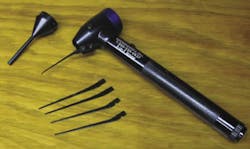
Photo 1 shows the LKM 211 3-in-1 scope from Lockmasters, Inc. that I’ve been using for the last few years. This scope features LED illumination, interchangeable speculums, and a selection of probes that can be attached to the speculum in several different positions. Scopes of this type are available from a variety of different suppliers and generally cost less than $200.
Another factor that comes into play when reading wafer locks is “depth of field.” If you’ve ever used a magnifying glass, you know that in order to get an object into sharp focus, you will have to move the glass in and out until you find the correct position where the object is in focus. When dealing with lenses, the area that is in focus at any given time is known as the depth of field. In order to read wafer locks, your depth of field has to be able to cover the distance from the first wafer to the last wafer. The depth of field is controlled not only by the magnification of the lens, but also by the brightness of the light that you are using. Of course, you can also alter the depth of field by moving the scope in and out in front of the lock. In general, you want the maximum depth of field that you can get without getting a lot of glare from the lock parts. Some scopes offer alternate lenses that can be used individually or together that allow you to change the depth of field.
Another type of scope that allows you to alter the depth of field is the “Ophthalmoscope.” These devices were originally designed to allow an optometrist to examine the inner workings of the human eye. As a result, they have both variable illumination and variable magnification, which results in an amazingly variable depth of field. With an ophthalmoscope, you can see anything that is visible inside the lock, from just about any reasonable distance.
The down sides to using ophthalmoscopes are that they are generally more expensive than otoscopes and they are much more fragile. An ophthalmoscope will set you back about $250, and you’ll probably want to invest in a padded storage case as well. The sheer volume of the lenses and lighting equipment that is crammed into the heads of these little scopes makes them way too delicate to be treated lightly. Ophthalmoscopes do not have a probe for manipulating the wafers; so you’ll need to use a pick or some other kind of probe in addition to the ophthalmoscope.
Photo 2 shows the LKM 3170 Mini-Ophthalmoscope which features 17 lenses that can be focused from 5mm to 250mm and has a maximum magnification of 10X. Devices like this can be purchased from a variety of sources both in the locksmith trade and from medical and veterinary supply houses.
Safe Opening
Both types of scopes that I’ve covered above can be used in safe opening, but they have very limited usefulness in that arena. In general, safe opening procedures that involve a scope require you to drill a hole through the door and into the lock. Once you have a hole into the lock, the scope is then used to look into the lock and either dial open the lock, manipulate electronic components, or locate structures inside the safe or lock.
Two of the most important things you want to look for in a safe opening scope are the ability to see into thick doors and around corners. Obviously, both otoscopes and ophthalmoscopes would be of limited value for these jobs.
Generally, the type of scope preferred for this type of work is known as a “Borescope.” These tools generally have a lens and a light source on the end of a probe that can be inserted through a small hole into the safe. Once the tool is inside the safe, the user can hopefully see whatever needs to be seen to solve the problem through the other end of the tool.
Traditional borescopes have an eyepiece that the user looks directly into in order to view the interior of the safe. Some newer borescopes use a camera system to send the view from the scope to a video screen or laptop computer to enlarge the view and make dialing easier. Lens adaptors will allow the image produced by some traditional borescope to be displayed on a monitor as well.
In order to see into the works of the lock, you will often need to literally see around corners, so most borescopes come with a selection of angled mirrors. These mirrors are essentially tips that fit over the end of the probe. The angle of the view provided by the tips varies a lot from brand to brand, but generally ranges from 45 to 70 degrees and in some cases even as much as 110 degrees.
Most borescopes offer one of two types of probes, either rigid or flexible. Rigid probes usually offer better image quality than flexible probes but are more fragile in field use. The exceptions to that are the electronic scopes that use a tiny camera mounted on the end of a flexible cable. With most borescopes, the price you pay is directly related to the quality of the image that you’ll get. Other features such as size, convenience and accessories all figure into the price, but image quality is the top concern.
Image quality can be hard to define, and will vary according to how the tool is to be used, and the lighting conditions. Since most borescopes see around corners with mirrors, the image is often reversed, which is something that the user will have to take into consideration while using the tool. More expensive scopes offer a prism system to “correct” the image. In the end though, no matter how wonderful the optics may be, it all comes down to the quantity and quality of the light that is used to illuminate the field of view. You want the most light that you can get with the least amount of glare. And unlike hand-held scopes, most borescopes offer adjustable lighting as a standard feature.
Most borescopes use a light source that delivers the light to the end of the borescope by way of fiber-optic strands. From there, it has to illuminate the work area and then be reflected back into the lens. Only a fraction of the light that goes into the work area comes back to your eye in the form of an image, so more light is almost always better. This is especially true if the working area is a relatively open area where the light has to illuminate a large volume. An example of this would be when you’re drilling a safe from the back in an attempt to unlock the door by dialing open the lock using the change-key hole. Not only would you want a rigid probe, so that you could aim the tip exactly where you want it, but you will also need a lot of light since most of the light will go to waste inside the cabinet. On the other hand, if you have drilled directly into the lock and are looking directly at the wheel-pack, too much light will only make the job harder.
Today, the connection for the light source on most professional borescopes has been standardized in what is known as an “ACMI Fitting.” Scopes that use this system will accept a variety of different interchangeable light sources. The light source can vary from a modified flashlight to a full-blown fan-cooled powerhouse capable of illuminating a room. With one of these monsters, a huge amount of light is transmitted into the scope by way of a fiber-optic cable while the heat produced by the light itself is dissipated into the surrounding room, where it can’t hurt the delicate parts of the borescope.
Photo 3 shows the GRANDKITAF “Hawkeye” adjustable focus borescope kit from Lockmasters, Inc. This kit includes two scopes of different lengths (7” and 17”) as well as two modular light sources that are based on Mini-Maglights. A borescope with adjustable focus allows you to see what you are doing from just about any distance. (Scopes that do not have an adjustable focus must be moved in and out like a magnifying glass until the subject is in focus.)
Photo 4 shows the LKM2014KIT from Lockmasters, Inc. that has a 26” long probe and an 110VAC stand-alone illuminator. Scopes of this type are for serious safe and vault work and are priced accordingly. The view through one of these monsters is nothing short of stunning, since the illuminator is capable of pumping 150 watts of light through a hole only one quarter of an inch in diameter! If this is the kind of work you do, then a scope of this nature will pay for itself in short order.
Some borescopes have flexible probes that not only allow you to see into hidden areas, but are also much less fragile than traditional straight borescopes. But as with anything else, there is a trade-off involved; the flexible borescopes generally cannot deliver as much light to the field of view or produce as clear an image as the straight borescopes. However, with the recent advances in LED and fiber-optic technology, some of these flexible borescopes can do some amazing things without costing you an arm and a leg.
I once used a hand-held flexible borescope, like the LKM 112575 24” Flex-Scope shown in photo 5, while hanging 60 feet up in the air in a boson’s chair to help retrieve a wire that had slipped down inside the mast of a sailboat. That scope probably saved us a couple of thousand dollars that it would have cost to haul the boat out of the water and remove the mast. While that is not a usage that most locksmiths would run into, I hope you get the idea of how versatile and handy the ability to see into inaccessible places can sometimes be.
Now that the cost of digital cameras has fallen, and the quality of miniature electronics has increased, there are some neat new electronic flexible borescopes on the market. The LKM6100 V4 electronic borescope, shown in photo 6, is one example. It features a built-in 3.5” LCD screen and a probe that is only 5.5mm in diameter. The built-in light source can pump a variable amount of light into the scene using tiny LEDs that surround the camera lens on the end of the probe. The V4 works a lot like a digital camera, with a built-in memory plus a card slot that accepts SD cards. If you see an image on the screen that you want to save, all you have to do is press a button!
Car Opening Scopes?
Being in the car-opening business, this is one of the questions that I’ve been bombarded with for years. Ever since I ran an ad comparing my car-opening videos to having x-ray vision, people have been either asking me to suggest a scope for car-opening, or suggesting scopes for me to try for car opening. The sad truth is that even the amazing scopes of today just don’t work for car opening, and I should know because I’ve certainly tried.
In theory, a scope like the V4 should be able to show you anything you want to see inside the door. But in practice, it’s just not a very useful solution. Even with today’s tiny probes, you still have to wedge a significant gap between the glass and the weather stripping in order to insert the probe. And, once you get the probe inside the door, you really have no way of steering it so that you can see particular targets inside the door. Another problem is that once the tip of the probe is inside the door cavity, the light spreads out so much that you either have to pump huge amounts of light into the door, or get the tip of the probe close to what you are trying to see.
Photo 7 shows a 12VDC flexible borescope that I paid $1400 for at one time to try to see inside of car doors. This little beauty uses a freestanding illuminator that can light up a ballpark, but it will also drain a car battery in short order. Over the years, I’ve done my best to get my investment back on this tool, but car opening is just not the way to do it. Scopes in general are just too expensive and fragile to use for such mundane jobs. And to add insult to injury, on many modern cars with cable linkages, there is nothing worth looking at inside the doors anyway.
All of this doesn’t mean that borescopes are useless for automotive locksmiths. They can be really handy when you are fighting a disconnected linkage or some other problem inside the door as long as you can roll the window down. I use my flex-scope regularly to check out the inside of new car doors before I pull the panel, but I always do it with the window down. This allows you to get the probe into the door without a lot of stress and you can usually use a second tool or a bit of fishing line to steer the tip of the tool where it needs to go.
In short, the scopes on the market today are incredible when compared to those available just a few years ago. But, before you open your wallet, make sure that you know exactly what you want to use your new scope for, and make sure that the scope you buy has the features you need. And as with any other investment of this nature, beware of buying from distributors who cannot give you tech support, or who only do business over the Internet. Remember, if it seems too good to be true, it probably is.
Scope sources are:
Lockmasters, Inc., 2101 John C. Watts Dr., Nicholasville, KY 40356. (800) 654-0637. www.lockmasters.com
MDS (Medical Diagnostic Services, Inc.), PO Box 1441, Brandon, FL 33509. (800) 435-9352. www.mdsincorporated.com
Mark Bates Associates, 200 Orchard Drive, Nicholasville, KY 40356. (888) 622-5495. www.mbausa.com